
Free live webinar · Tue, Nov 17, 1:00 PM ET
Remote Care in 2027: Decoding the Changes, Industry Perspectives, and What They Mean for Your Organization
CMS finalized the 2027 remote care rules on November 4, and most take effect January 1. In one hour you’ll hear what changed from the proposal, what other organizations are doing about it, and what to check in your own program.
Education first, not a demo Live Q&A Recording for everyone

Tuesday, November 17, 20261:00 to 2:00 PM Eastern
WhenTue, Nov 171:00 PM ET, 2026
Length60 minutes45 minutes of content, 15 of live Q&A
WhereMicrosoft TeamsJoin from a browser, no Teams account needed
CostFreeRecording sent to everyone who registers
Why this, why now
The remote care rules change on January 1, 2027
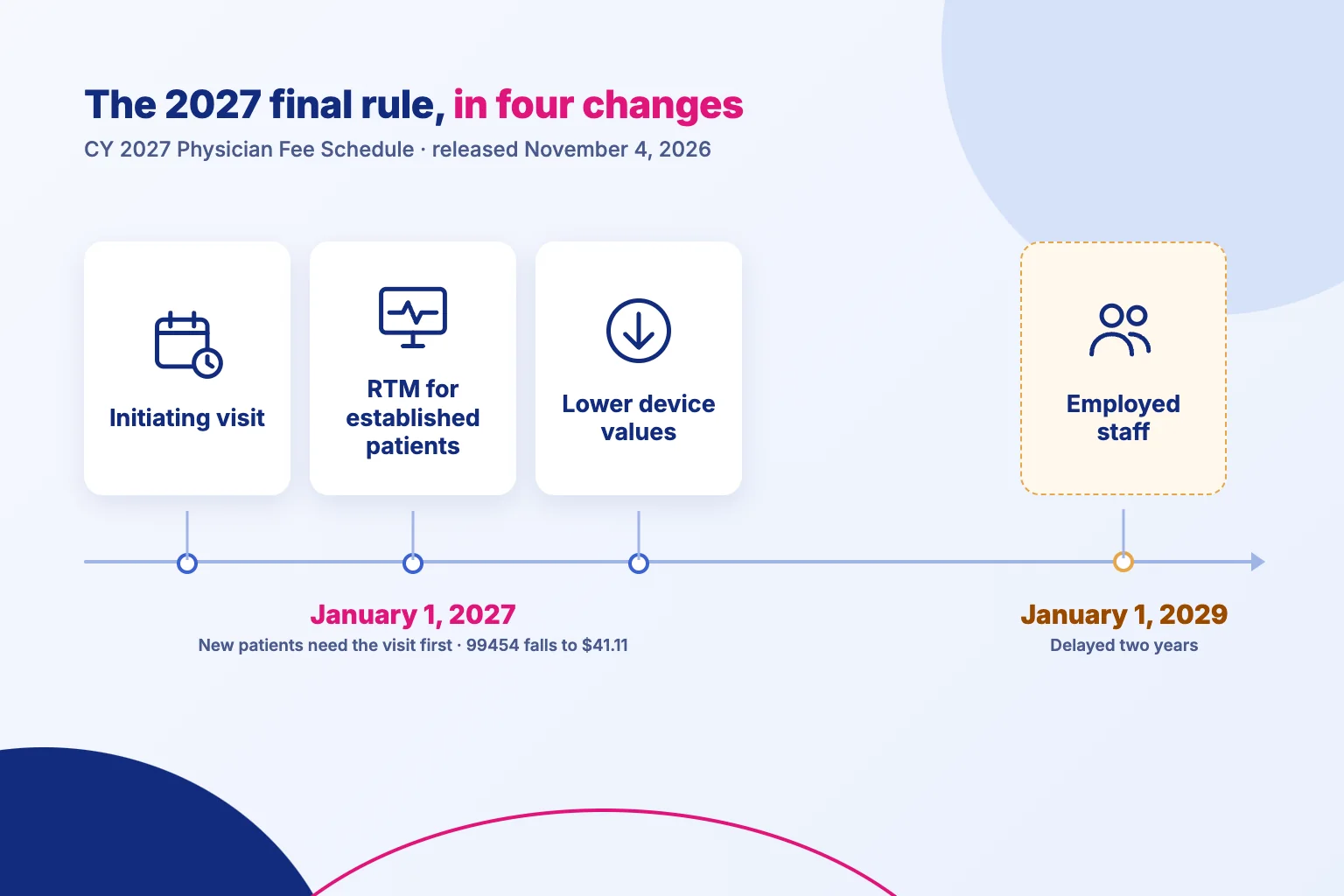
CMS released the 2027 final rule on November 4, 2026. It pulls the opposite way from 2026, which widened remote monitoring. This year it’s guardrails: what has to happen before a patient is enrolled, what the devices are worth, and, from 2029, who may do the billable work.
Final · Jan 1, 2027A visit before monitoring starts
New RPM and RTM patients need a face-to-face or telehealth visit where monitoring is discussed. Patients already enrolled before January 1 are grandfathered.
Final · Jan 1, 2027RTM for established patients only
RTM now follows RPM and needs an existing relationship between the patient and the billing practice.
Final · Jan 1, 2027Lower device values
The device code 99454 falls from $52.11 to $41.11 nationally, and CMS’s own files point to a deeper cut in 2028. Treatment management stays about flat.
Final · Jan 1, 2029Your own staff do the billable work
CMS finalized the employed-staff rule but gave it two more years. Until then vendor staff can still do the minutes, and buying software and devices stays allowed after.
Two parts of the July proposal moved in providers’ favor: the staffing rule got a two-year delay, and CMS dropped its plan to cut treatment management. Why the tightening at all? An OIG report in September 2024 found about 43% of Medicare RPM enrollees didn’t receive all parts of the service, and a follow-up in August 2025 put 2024 RPM payments at $536 million, up 31% in a year. Our breakdown of the final rule has every rate and a checklist for January.
What we’ll cover
Five questions every care team is asking right now
Each answer is useful whether or not you ever work with HealthArc. Practice-specific billing and legal questions we’ll follow up on privately.
01
What changed for 2027?
- What CMS finalized, changed or dropped from the July proposal, with effective dates.
- The initiating visit, the grandfather clause and the 2029 staffing deadline, in plain language.
- Why CMS is tightening the rules now.
02
What are other organizations seeing?
- How practices, FQHCs and health systems are reading the rule.
- Where programs are already adjusting staffing and enrollment.
- The questions we hear most from care teams right now.
03
What does it mean for my organization?
- Who performs your monthly monitoring time, and whether they’re your employees.
- How you enroll and document patients, and what an auditor would look for.
- What to ask if you work with an outside vendor.
04
What does Medicare actually pay?
- National benchmarks for RPM, CCM, PCM, APCM and TCM, and how 2027 moves them.
- Which codes can be billed together and which can’t.
- Every figure checked against the CMS fee schedule before it’s shown.
05
Should we run it ourselves or outsource it?
- Running the program with your own staff on a software platform.
- Handing agreed parts to a full-service partner, within what the final rule allows.
- A decision guide, not a pitch. Neither model fits everyone.
Got a question we should answer?
Add it when you register. The most common ones go into the session.
Register and ask Agenda
Sixty minutes, planned to the minute
Forty-five minutes of content and a full fifteen for your questions. HealthArc’s own service models come up in one segment, and we cover both sides of it.
- 0–5minutesWelcome and quick pollWho’s in the room and which programs you run today.Sudeep Bath, host
- 5–20minutesDecoding the 2027 changesWhat CMS finalized, what it means and when it takes effect.Sudeep Bath
- 20–30minutesIndustry perspectivesWhat practices, FQHCs and health systems are seeing and changing.Panel, moderated by Jack Whittaker
- 30–40minutesWhat it means for your organizationWhat Medicare pays, and building the program in-house or outsourcing it.Kaitlyn Batch-Monteforte and Sudeep Bath
- 40–45minutesFive takeawaysThe readiness checklist, item by item.Kaitlyn Batch-Monteforte
- 45–60minutesLive Q&AYour questions, answered live.All speakers
Speakers
Who you’ll hear from
Three people from HealthArc’s leadership team walk through the final rule, what Medicare pays and what it means in practice, with every figure checked against the CMS fee schedule.

Sudeep BathCEO, HealthArcHost
Hosts the session, walks through what CMS finalized for 2027, and lays out the build-or-outsource decision honestly, with the trade-offs on both sides.

Kaitlyn Batch-MonteforteClinical Leader, HealthArc
Covers what the rules mean day to day for care teams, what Medicare pays, and the readiness checklist.

Jack WhittakerChief Revenue Officer, HealthArcModerator
Moderates the industry panel and the live Q&A, and keeps the hour on time.
Who should attend
Anyone who runs, bills or is weighing a remote care program
From a single-site practice to a multi-state health system. If RPM, RTM, CCM or another care management program touches your revenue, this hour is for you.
Physicians and practice ownersYou bill these codes and sign the orders.
Practice administratorsYou run enrollment, staffing and vendor contracts.
FQHC and rural clinic leadersYou’re weighing the rules against thin staffing.
Health system and ACO care leadersYou run care management across many sites.
Billing and revenue cycle teamsYou’ll field the claims questions in January.
Compliance teamsYou need to know what an auditor will check.
What you take away
Leave with a plan for your own program
You’ll know what’s final for 2027, what to check in your program, and how to decide between building it and outsourcing it.
The full recordingEmailed to everyone who registers, and available on demand afterward.
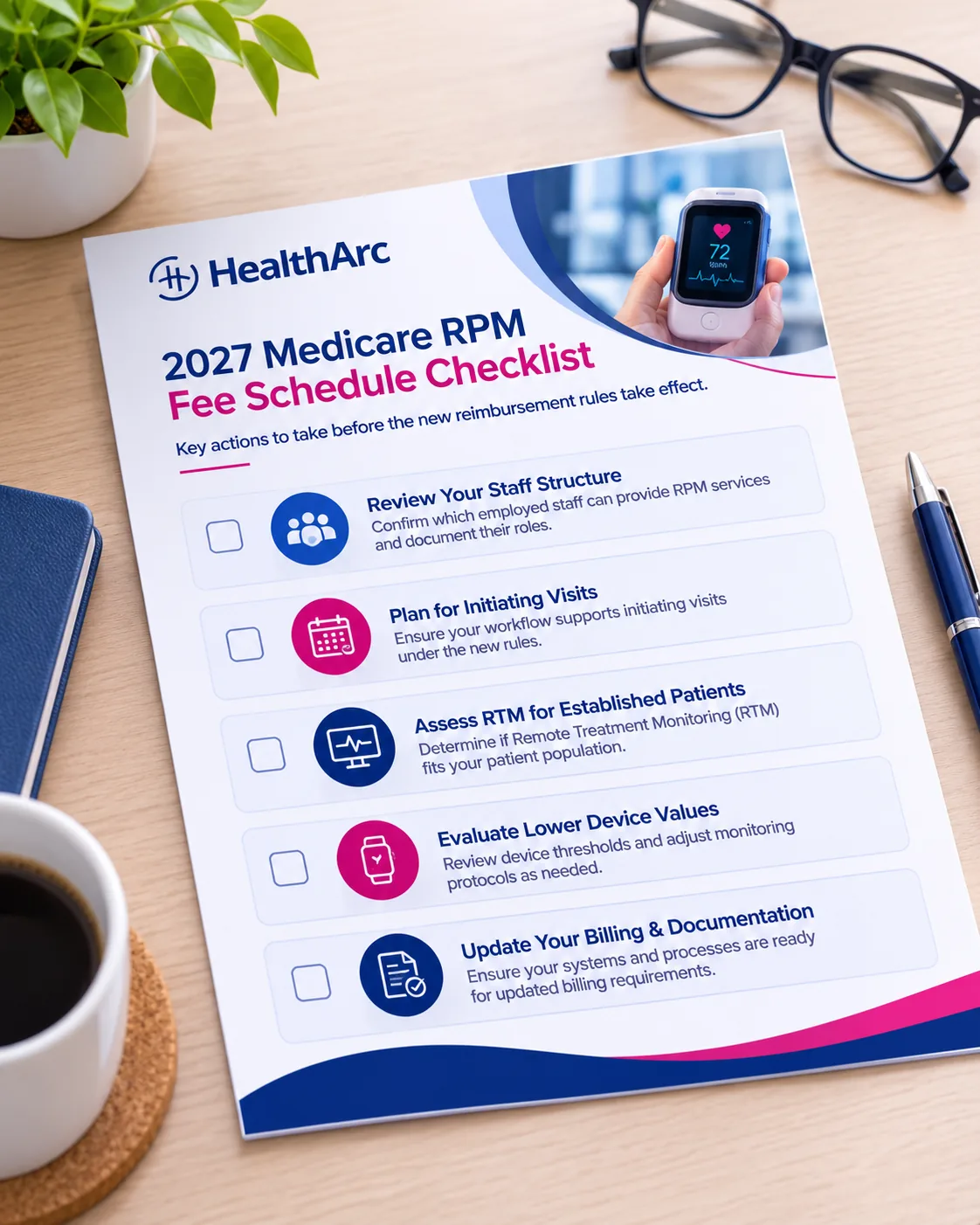
A one-page readiness checklistWho does the work, where the initiating visit sits, documentation, eligible codes and what your vendor contract says.
An optional readiness reviewA free 30-minute call with our team about your own program. A conversation, not a demo.
Tuesday, November 17, 2026 · 1:00 PM ET
Save your seat for Remote Care in 2027
Registration takes a minute. Can’t make it live? Register anyway and we’ll email you the recording. It will also be posted right here after the session.
Questions
Common questions
When is the Remote Care in 2027 webinar?
Tuesday, November 17, 2026, from 1:00 to 2:00 PM Eastern. CMS released its final rule on November 4, so the session covers what’s final, not what was proposed.
Is the webinar free?
Yes. There’s no cost to attend or to get the recording.
Will it be recorded?
Yes. Everyone who registers gets the recording and the checklist by email, whether or not they attended live. It stays available to watch on demand afterward.
Do I need Microsoft Teams?
No. You can join from a web browser without a Teams account. The join link comes by email after you register.
Is this a HealthArc product demo?
No. It’s an educational session. HealthArc’s own service models come up in one ten-minute segment on building versus outsourcing, and we present both sides.
Can I ask about my own practice?
Bring your questions to the live Q&A. Anything specific to your billing or contracts we’ll follow up on privately after the session.
Looking for something to watch now? Browse the HealthArc video library.