
dddddd
By Sudeep Bath
| February 20, 2026
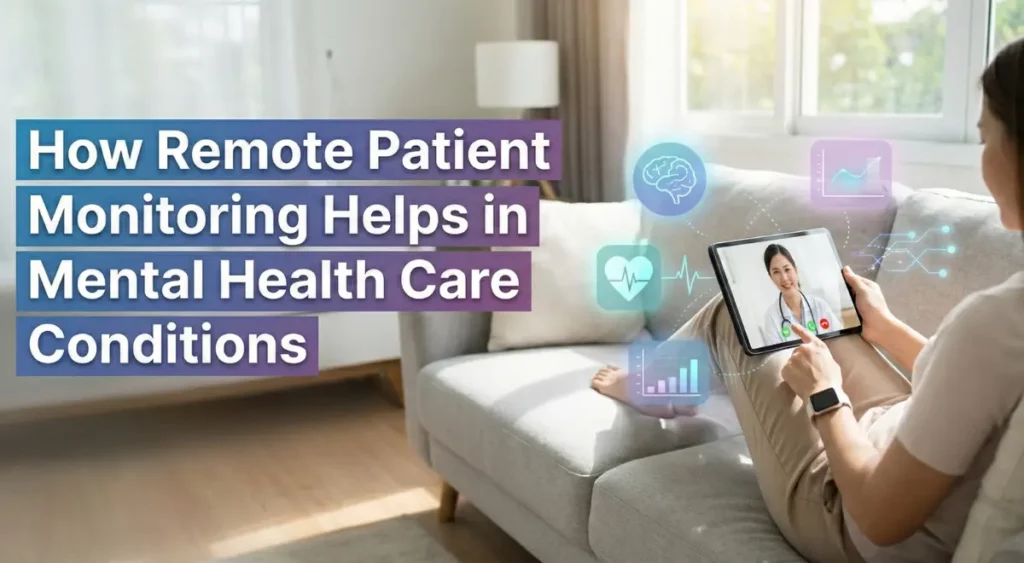
There is a structural change happening in mental health care. In recent years, more people have become aware of and able to use behavioral health services, but the way these services are delivered have mostly stayed the same. Patients see therapists once a week or psychiatrists once a month, but their depression, anxiety, bipolar disorder, and PTSD change every day. Symptoms get worse between visits, the effects of medication change over time, and early warning signs are often missed.
Remote Patient Monitoring (RPM) is becoming a strong way to close this gap. For mental health professionals, RPM gives them structured, on-going access to patient status between appointments. This lets them move from reactive crisis management to proactive stabilization. This change is changing the way behavioral health services are given, measured, and kept up.
The Structural Gap in Conventional Behavioral Health Monitoring
Traditional mental health treatment relies a lot on people telling what happened in the past. During clinical visits, providers ask patients about their sleep and mood and whether changes to their medications are helping. These talks are very important, but they depend on memory-based recall. Patients may inadvertently underreport symptoms, overlook emotional fluctuations, or fail to acknowledge gradual deterioration.
This episodic model leaves out some important information. Patients may already be close to a crisis level by the time their depression, anxiety, or mania gets worse during an appointment. Remote patient monitoring for mental health providers solves this problem by allowing for the collection of longitudinal data. Instead of just talking to patients, clinicians can look at structured trends in mood, sleep, physiological stress, activity levels, and how well they are taking their medications.
One of the most important changes in behavioral health care is the switch from episodic snapshots to continuous monitoring.
What RPM Means in Terms of Behavioral Health
RPM in mental health is different from how it is usually used for long-term physical problems. In cardiology or endocrinology, RPM often focuses on tools that check blood pressure or blood sugar levels. In behavioral health, RPM combines digital symptom tracking, standardized mental health tests, physiological data from wearable’s, and structured patient engagement tools.
Patients can take validated tests like the PHQ-9 for depression or the GAD-7 for anxiety on a regular basis. They might keep track of their mood scores every day, how long and how well they sleep, and how well they take their medications. When wearable devices are added, physiological data like heart rate variability, resting heart rate, and physical activity give emotional states more meaning.
For mental health professionals, RPM serves as a digital augmentation of clinical observation. It gives you a better idea of how patients act when they’re not in therapy and lets care reflect real-life situations instead of just reports.
On-going symptom tracking and clinical accuracy
One of the best things about RPM for mental health providers is that it lets them see how symptoms change over time. For example, depression often gets worse over time. Sleep problems may come before mood problems, and a lack of physical activity may mean a higher risk of relapse. These changes might not be noticed until the next scheduled visit if they aren’t tracked all the time.
Structured digital reporting helps doctors find small patterns that they might not have seen otherwise. A steady drop in mood scores, an increase in anxiety ratings, or sleep fragmentation that gets worse over time can all be signs that early intervention is needed. Changes to treatment are based on data instead of being based on what happens.
This long-term visibility makes it easier to make accurate diagnoses and adjust medications more precisely. It also makes it less necessary for patients to remember things, which can be affected by their mood or cognitive bias at the time of the appointment.
Using physiological signals in mental health care
Mental health disorders are profoundly linked to physiological regulatory systems. Stress triggers the autonomic nervous system, sleep disruptions affect emotional regulation, and levels of activity are linked to mood stability. RPM platforms that combine data from wearable devices give us an objective look at these patterns.
Heart rate variability, for example, is linked to the ability to handle stress and control emotions. Decreases in variability may indicate increasing anxiety or persistent stress. Changes in how long and how often people sleep often happen before they have a manic or depressive episode. In bipolar disorder, activity spikes may be a sign of manic behavior, while long periods of inactivity may be a sign of a depressive relapse.
Remote patient monitoring enhances clinical assessment by integrating subjective symptom reporting with objective physiological indicators. Mental health professionals get a more complete picture of a patient’s stability than just talking to them.
Early Intervention and Preventing Crises
Early intervention is a key selling point for RPM for mental health providers. Behavioral health crises don’t usually happen all of a sudden. They often follow a pattern of slowly getting worse, with missed medications, less interest in activities, worse sleep, and higher stress levels.
These patterns can be found by remote monitoring systems, which can then send out timely notifications. A care manager might start a secure message, a psychiatrist might set up a telehealth check-in, or medication changes might be looked at before symptoms get worse. This proactive approach reduces the risk of an emergency room visit or admission to a psychiatric hospital.
RPM promotes preventive psychiatry over crisis management by shifting the point of intervention forward in the cycle of deterioration. This translates to greater safety and stability for patients. From a provider perspective, this translates to improved outcomes and reduced strain on resources for acute care.
Enhancing medication adherence and effectiveness
Medication adherence remains a significant challenge in the management of behavioral health. You have to take antidepressants, mood stabilizers, and antipsychotics simultaneously and monitor them. Patients can discontinue their medications due to side effects, lack of efficacy, stigma associated with the treatment, or simply forgetting to take them.
Providers may incorrectly attribute symptom relapse to treatment failure rather than non-adherence if they cannot view patterns of adherence. RPMs make it possible to track symptoms and correlate them with medication use. This helps the physician make more informed decisions about what medications to give and how effective they are.
Long-term monitoring of medication adherence helps the physician distinguish between pharmacologic failure and non-adherence, which helps in making clinical decisions.
Assisting patients with multiple issues and conditions
Many patients who receive care for mental health issues also have chronic medical conditions such as diabetes, cardiovascular disease, or chronic pain. These other conditions can exacerbate mental health problems, and this can impact the effectiveness of treatment and its risk of harm to the patient.
RPMs that monitor both behavioral and physical health data make it easier to coordinate care. Primary care physicians, psychiatrists, therapists, and case managers can all view the same data. This is useful in care models, and it is also useful in value-based care settings where patient populations are becoming increasingly important.
RPM demonstrates how all aspects of health are interconnected by relating the monitoring of both behavioral and physical health.
Operational and Strategic Advantages for Mental Health Practices
In addition to clinical benefits, RPM offers significant operational advantages for mental health practitioners. Clinicians can focus sessions on interpretation and intervention instead of gathering information if they look over structured data before appointments. This makes things run more smoothly and increases the effectiveness of therapy.
The therapeutic alliance is also strengthened by on-going communication between visits. People who keep track of their mood and progress often become more aware of themselves and more responsible. This higher level of involvement may lower the number of people who drop out and raise the number of people who stay in the program for a long time.
At the population level, aggregated RPM data helps practices find groups of people who are at high risk, keep an eye on relapse patterns, and see how well their programs are working. This type of visibility is helpful for strategic planning and is in keeping with value-based reimbursement programs.
Aligning Reimbursement and Adhering to the Rules
The reimbursement structures are making it easier for the behavioral health side to implement RPM. The Remote Patient Monitoring CPT codes, Chronic Care Management, and Behavioral Health Integration models could all play well together to make structured monitoring programs more financially feasible.
However, in order for this to be successful, there has to be close attention paid to compliance. It is necessary to have a technology infrastructure that is HIPAA compliant, patient consent, structured escalation procedures, and structured documentation processes. Mental health professionals must ensure that monitoring processes enhance care without making it too difficult for staff.
When implemented correctly, RPM improves the quality of care and the financial viability of the practice.
Difficulties in Putting RPM into Action for Mental Health Providers
There are many benefits to RPM, but it needs to be used carefully. Too much data without clear limits can make people tired of alerts. Inconsistent patient involvement may restrict actionable insights. Also, differences in digital access can make programs less open to everyone.
Mental health professionals need to make RPM workflows that are both practical and watchful. However, success in the long run requires the development of clear clinical protocols, simple alert systems, and patient education.
The Future of Remote Patient Monitoring in Behavioral Health
The future of digital health technology may include mental health professionals using RPM with predictive analytics and AI-driven risk modelling. Digital phenotyping methods may be able to passively evaluate behavioral data to predict the exacerbation of symptoms before patients are consciously aware of changes.
All these developments indicate that the future of behavioral health care will be more preventive in nature and will make decisions based on data. Professionals will be able to forecast crises better than they can respond to them.
Conclusion: The Need for RPM in Behavioral Health
Mental health disorders are dynamic, and they fluctuate between sessions and are influenced by both psychological and physiological factors. The episodic care model is not sufficient to address these issues.
Remote Patient Monitoring allows you to have the visibility you need to improve early detection, tailor treatment, manage medications, and prevent crises from occurring. For mental health professionals facing a shortage of staff, more patients, and the need to pay based on value, RPM provides a flexible framework that enhances both outcomes and long-term sustainability.
The future of behavioral health care is moving towards proactive and data-informed approaches. RPM is leading this charge and revolutionizing the way mental health professionals practice, measure, and improve their work.
Frequently Asked Questions (FAQs)
What does Remote Patient Monitoring (RPM) mean in mental health care?
Remote Patient Monitoring (RPM) in mental health care means using digital tools, mobile apps, and wearable devices to keep an eye on a patient’s mental and physical health outside of a doctor’s office. It lets providers keep an eye on mood, sleep, stress levels, medication adherence, and behavior patterns in real time, which helps them make better clinical decisions.
In what ways does RPM help mental health professionals get better results for their patients?
RPM lets providers go from giving care only when needed to keeping an eye on patients all the time. By keeping an eye on real-time data like mood scores, sleep patterns, and activity levels, doctors can spot early warning signs, step in sooner, and tailor treatment plans to each patient. This leads to better outcomes and fewer crises.
What kinds of behavioral health problems can RPM help with?
RPM can help people with a number of mental health issues, such as:
- Sadness
- Disorders of anxiety
- Having bipolar disorder
- PTSD, or Post-Traumatic Stress Disorder
- Long-term stress and burnout
It works best for conditions that change a lot between doctor visits.
What kinds of mental health data does RPM collect?
RPM systems gather both subjective and objective information, such as:
- Scores for mood and symptoms (PHQ-9, GAD-7)
- How long and well you sleep
- How much physical activity you do
- Stress and heart rate variability markers
- Following the medication
This mix gives a full picture of a patient’s health.
How does RPM make it possible to get mental health care sooner?
RPM can pick up on small changes, like a bad mood, trouble sleeping, or less activity. These patterns often come before a mental health crisis. Providers can step in early to stop hospitalizations and emergencies by doing telehealth check-ins, changing medications, or coordinating care.
Can RPM help people with behavioral health issues stick to their medication?
Yes, RPM helps keep track of both how well people are taking their medicine and how their symptoms are getting worse. This helps doctors tell the difference between treatment failure and non-adherence, which leads to better patient outcomes and more accurate medication management.
What advantages does RPM offer to mental health professionals?
Some of the most common issues are:
- Getting too many alerts can make you tired of them.
- Issues with getting patients to take part and stick to their treatment plans
- Things that make it hard to access digital content
- Need for rules and workflows that are clear
The right implementation strategies can help with these problems.
How does RPM help mental health professionals work more efficiently in the clinic?
Before appointments, RPM lets doctors see organized patient information. This saves time by cutting down on the time spent gathering data and makes sessions more focused and useful by focusing on treatment and intervention.
What does the future hold for RPM in mental health?
Digital phenotyping, AI-powered predictive analytics, and automated risk detection are all things that will be part of RPM in the future. These changes will help providers find mental health problems before they get worse and do something about them before they do, which will make care more personalized and preventative.

Sudeep Bath
Sales & Tech Leader with 22+ years of experience Former SVP for $37B PE portfolio company Advisor and Board member in number of startups



Categories
Advanced Primary Care Management→AI & Care Coordination→Behavioral Health Integration→Care Management Programs→Chronic Care Management→Digital Health & Software Solutions→General Remote Care Topics→Medication Therapy Management→Pricing & Business Strategy→Principal Care Management→Remote Patient Monitoring→Remote Therapeutic Monitoring→Transitional Care Management→
Related Blog
- April 2, 2026 | Read Time: 16 mins
Role of Remote Patient Monitoring in CMS Access Model Programs
Modern day healthcare system is focused on in-home or remote monitoring and...
Learn More- March 12, 2026 | Read Time: 17 mins
Common Conditions Monitored with Remote Patient Monitoring (RPM)
Just imagine an advanced healthcare system that tracks and analyze your health...
Learn More- February 13, 2026 | Read Time: 8 mins
CPT 99445 and 99470: Complete 2026 Guide to Short-Window RPM Billing with HealthArc
CPT 99445 and CPT 99470 are transforming how practices bill for Remote...
Learn More