
Chronic Care Management32 articles
Chronic Care Management guides, billing and workflows
How to run CCM so it survives an audit: 99490 and the complex-CCM codes, defensible time tracking, care plan requirements, consent, and staffing models that actually scale past a few hundred patients.
32Articles in this topic
Sep 2026Most recent update
9 minAverage read length
Latest
Jump to all 32 articles Newest in Chronic Care Management
What changed most recently — start here if you already know the program.
The archive
The complete Chronic Care Management archive
32 articles, newest first — the whole topic on one page. Search within it or sort for a shorter read.
Showing 32 of 32 articles
Managing the CKD + Hypertension + Diabetes Triad With One Remote Monitoring Program
How to monitor CKD, hypertension and diabetes through one coordinated RPM program: which devices each patient actually needs, how alerts escalate, and why 99454 pays…
Sudeep BathRead
Remote Patient Monitoring and Chronic Care Management: The Complete Platform Comparison and Implementation Guide (2026)
Compare RPM and CCM platforms on the five things that decide real-world performance, then implement an RPM program step by step with 2026 CPT rates.
Sudeep BathRead
10 Best Chronic Care Management Software Platforms in 2026
Compare the 10 best chronic care management software and companies in 2026. See why HealthArc leads for CCM billing, RPM integration, and ROI.
Sudeep BathRead
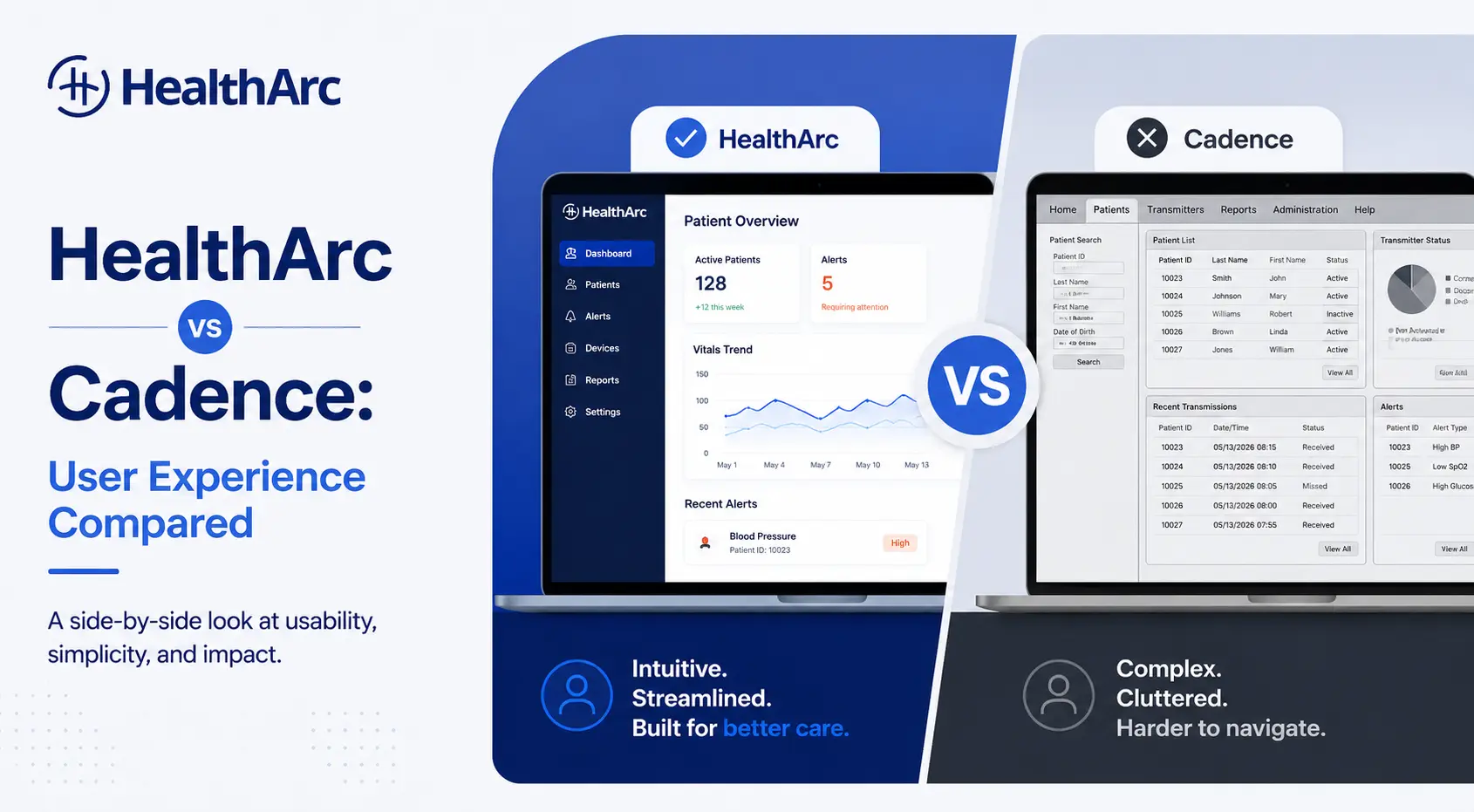
HealthArc vs Cadence: User Experience Compared
Compare HealthArc vs Cadence user experience, usability, navigation, and workflow efficiency for remote patient monitoring and chronic care management teams.
Jack WhittakerRead

The Most Common Chronic Diseases and How to Manage Them Effectively
A guide to the most common chronic diseases: what chronic disease means, the leading conditions, their causes, and how to manage them effectively.
Sudeep BathRead

CMS ACCESS is Advancing Chronic Care through Effective, and Scalable Solutions
See how HealthArc leverages the CMS ACCESS model to advance chronic care with effective, scalable solutions that improve coordination, access, and outcomes.
Sudeep BathRead

Coverage Gaps ACCESS Aims to Fill: What Traditional Medicare Payment Left Behind
Discover how HealthArc’s ACCESS model fills Medicare coverage gaps left by traditional payment systems—improving care coordination, access, and outcomes.
Sudeep BathRead

RPM’s Role in Identifying Early Symptoms of Chronic Conditions for Prevention
Check out the role remote patient monitoring is playing in preventing the onset of chronic conditions by identifying the early symptoms.
Prateek HaswaniRead

Complex Chronic Care Management (CCCM) CPT Codes 2026
MPFS classified CPT codes 99487 and 99489 as general supervision codes under the Complex Chronic Care Management (CCCM).
Prateek HaswaniRead
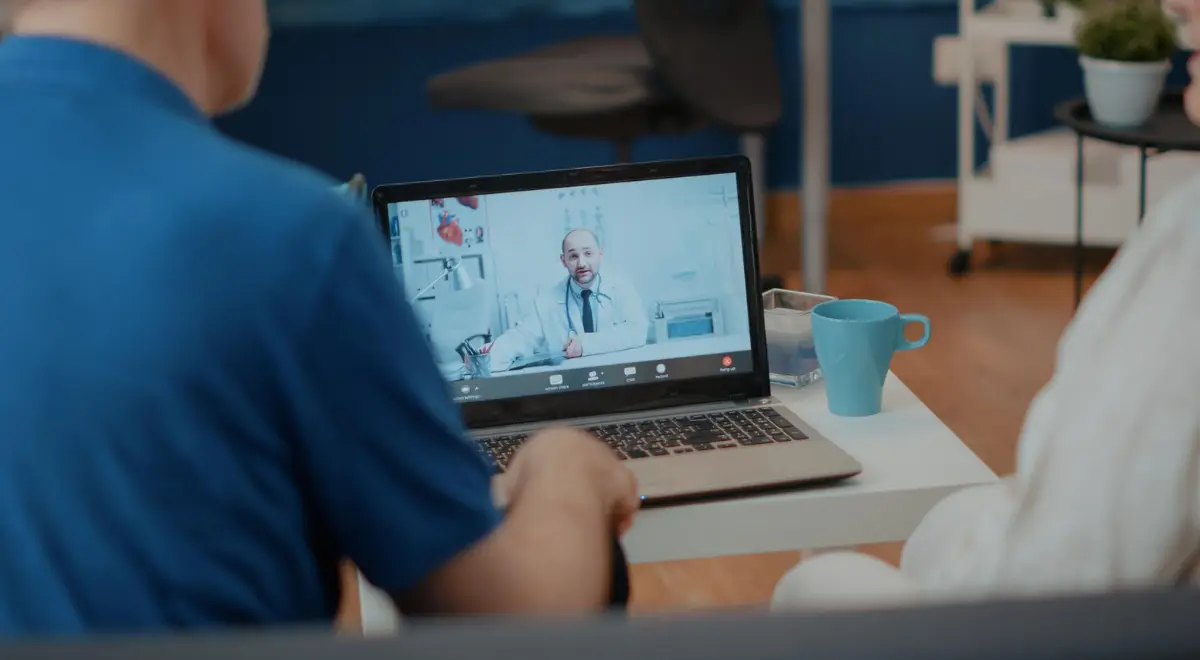
How Remote Patient Monitoring Improves Chronic Care Management?
Discover how remote patient monitoring improves chronic care management with real-time insights, timely intervention, and cost savings.
Prateek HaswaniRead

Chronic, Principal, and Transitional Care Management Software: Which Is Right for You?
In this blog, we have discussed the difference between chronic care management, principal care management and transitional care management software.
Prateek HaswaniRead
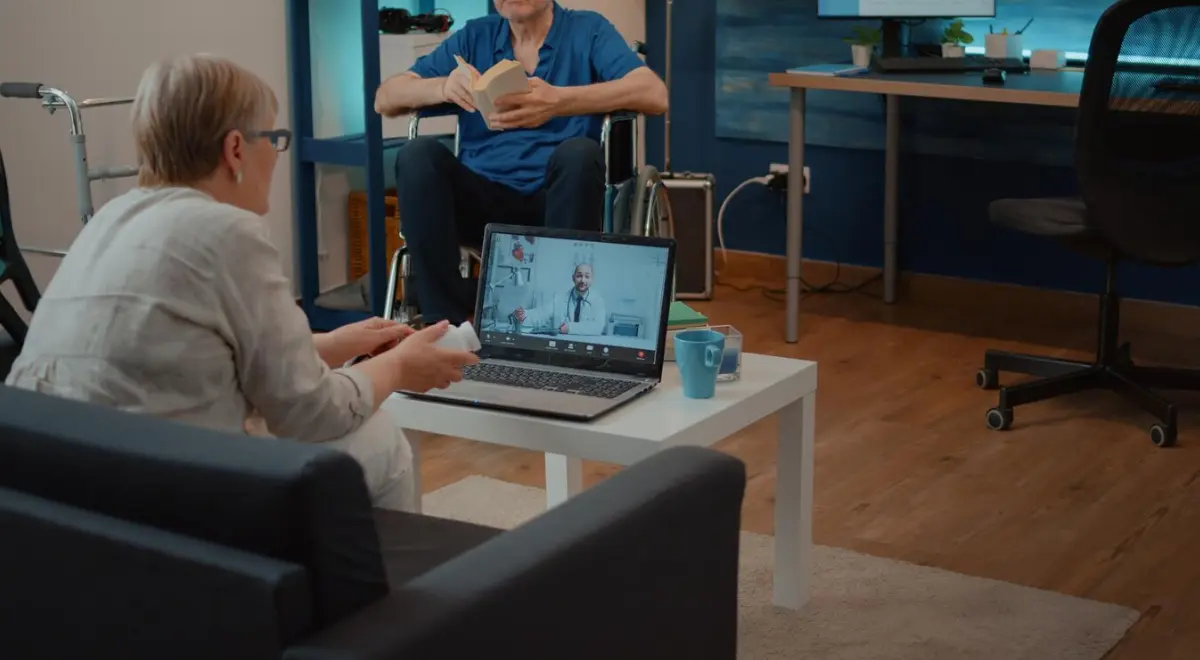
The Role of Remote Patient Monitoring in Chronic Disease Management
Want to know how RPM can help in chronic disease management? In this blog, Check benefits RPM provides for managing chronic diseases.
Prateek HaswaniRead

CPT Code 99489 For Complex Chronic Care Management (CCCM)
CCCM CPT Code 99489 is an add-on code to CPT 99487 and reimburses clinicians for the additional time spent on providing treatment and advice.
Prateek HaswaniRead

New Code G0511 For FQHCs Expands Chronic Care Management
Learn how HCPCS code G0511 helps FQHCs and RHCs bill for Chronic Care Management. Covers at least 20 minutes of clinical staff time for primary care services.
Prateek HaswaniRead

A Comprehensive Guide To Chronic Care Management (CCM)
Chronic Care Management (CCM) explained: eligibility, 2026 CPT codes, Medicare requirements, patient benefits, and how to run a compliant CCM program.
Prateek HaswaniRead

Tips To Implement A Successful Chronic Care Management (CCM) Program
This blog guides healthcare providers on how to start and implement a successful chronic care management program for patients.
Prateek HaswaniRead

Top 12 Frequently Asked Questions on Chronic Care Management (CCM) Billing & Reimbursement
In this blog, we have formulated answers to some of the frequently asked questions about chronic care management billing and reimbursement you must be aware of.
Prateek HaswaniRead

Remote Patient Monitoring & Chronic Care Management for Obesity Management
Remote Patient Monitoring (RPM) and Chronic Care Management (CCM) play a significant role in improving obesity management outcomes.
Prateek HaswaniRead

CPT Code 99490 For Billing Chronic Care Management (CCM) Services
CPT code 99490 explained: description, the 20-minute non-complex CCM rule, documentation requirements, and 2026 Medicare reimbursement.
Prateek HaswaniRead

Top 4 Use Cases For Chronic Care Management (CCM)
Obesity, hypertension, CHF, and diabetes are chronic conditions that deliver successful patient outcomes with CCM. Read our blog to know more.
Prateek HaswaniRead

Manage Chronic Conditions Using Remote Patient Monitoring (RPM)
Remote patient monitoring is used to manage chronic conditions and allows patients to track their symptoms and vital signs from home.
Prateek HaswaniRead

Improved Outcomes in Chronic Care with RPM
How RPM helps you take control of your health, track progress, and achieve better results in managing chronic conditions.
Prateek HaswaniRead

All About CPT 99487 – Complex Chronic Care Management
CPT code 99487 explained: complex chronic care management description, time and documentation requirements, add-on 99489, and 2026 reimbursement.
Prateek HaswaniRead

Billing Rules for CPT 99490 & Other Chronic Care Management Codes
Medicare reimburses the CCM program if at least 20 minutes of patient service is performed each month. For more details on CCM billing.
Prateek HaswaniRead

Integrating RPM with CCM for Managing Chronic Conditions
Chronic Care Management (CCM) is an important part of modern healthcare and involves providing non-face-to-face treatments.
Prateek HaswaniRead

Addressing Social Determinants of Health (SDOH) Using Chronic Care Management (CCM)
Chronic Care Management programs play an effective role in addressing social determinants and enhancing the quality of life for patients.
Prateek HaswaniRead

Chronic Care Management (CCM) CPT Codes & Requirements
The four CPT codes used to report CCM services in 2024 are 99490, 99439, 99491, and 99437. Feel Free to talk to our team at +201 885 5571.
Prateek HaswaniRead

What Benefits Does Chronic Care Management Program Give To The Patients?
Check out the benefits patients can enjoy by utilizing chronic care management programs to achieve their long-term healthcare goals.
Prateek HaswaniRead

CMS Medicare Chronic Care Management – New CPT Code and Guidelines
Chronic care management CMS CPT codes with reimbursement guidelines. New medicare CMS CPT codes are 99490, 99439, 99491, 99437, 99487..
Prateek HaswaniRead

Chronic Care Management Companies : Top 10 Features – HealthArc
Every chronic care management company should have these 10 features. 1. Security - 2. Compliance - 3. Enrollment - 4. Net Patient Churn Management
Prateek HaswaniRead

Understanding the Importance of Chronic Care Management (CCM)
Chronic Care Management (CCM) is about caring for elderly pain management and providing timely patient details to physicians.
Prateek HaswaniRead

Chronic Care Management Software: The Best Way to Increase Your Practice’s Revenue
Advanced scientific techniques and better patent management with chronic care management software help healthcare professionals to increase their revenue.
Prateek HaswaniRead
Reading about Chronic Care Management is one thing. Running it is another.
See how the program works day to day — enrollment, device logistics, time tracking and audit-ready documentation — on the HealthArc CCM platform.
Keep reading
See all topics Related topics
These programs share codes, staff and time with Chronic Care Management — most teams end up running more than one.
Ready when you are
Bring Chronic Care Management into one platform
HealthArc runs RPM, CCM, RTM, TCM, PCM, BHI, APCM, MTM and PIN on a single login — with automated CPT time tracking and documentation that holds up in an audit.