
dddddd
By Sudeep Bath
| March 19, 2026
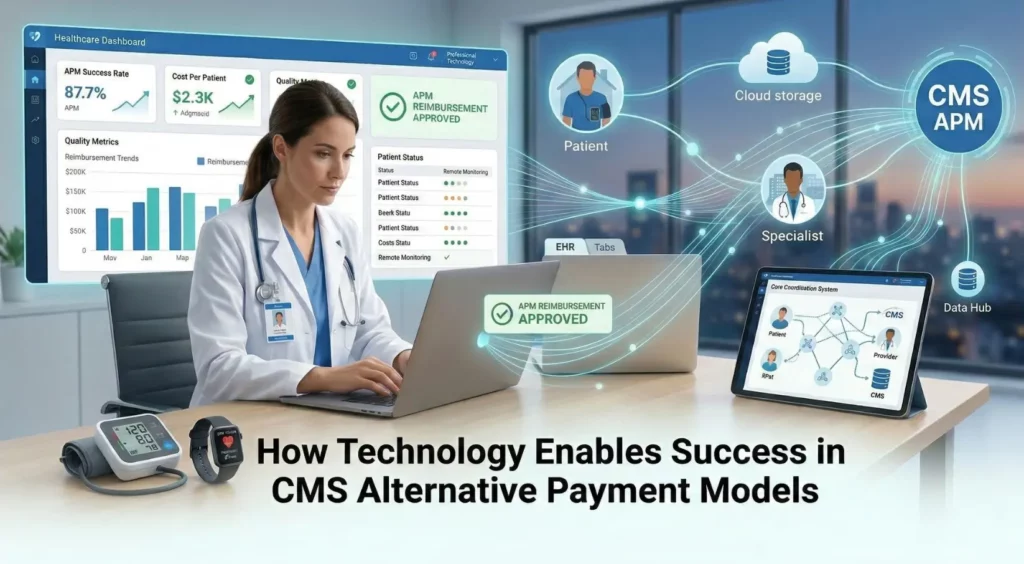
The US healthcare reimbursement model is transitioning away from volume to value. According to the Centers for Medicare and Medicaid Services (CMS), a substantial portion of healthcare reimbursement today is connected with achieving quality outcomes, not simply the number of services offered. This shift is aimed at enhancing the quality of patient care, decreasing overall healthcare expenditures, and improving collaboration among providers.
The cornerstone of this transformation effort is the CMS Alternative Payment Models (APM). These models provide incentives to healthcare providers delivering quality and cost-effective care. Organizations that effectively achieve patient care improvement while managing their costs receive incentive payments in recognition of their success and services provided. In order to realize the full potential of the CMS APMs, providers need to develop advanced systems, utilize data to make decisions, and have efficient systems/processes for delivering care.
This is where healthcare technology plays a critical role. Digital health platforms and Remote Patient Monitoring (RPM) programs in the United States, predictive analytics tools, and integrated care management systems enable providers to meet the complex requirements of value-based reimbursement programs.
What Are CMS Alternative Payment Models?
Previously, healthcare providers were reimbursed based on a fee-for-service payment system, which paid them based on how many services or procedures they deliver to their patients. Since this model paid for volume of services, this tempted the providers to provide more services rather than delivering quality care that improves patient outcomes.
CMS Alternative Payment Models (APMs) have been created to change that by shifting the focus from fee-for-service reimbursement to quality and efficiency-based reimbursement. APMs encourage healthcare providers to coordinate care with their patients, minimize avoidable hospitalizations, and improve patient health outcomes through coordinated care.
APMs can include many types of payment models such as bundled payments, accountable care organizations (ACOs), and other value-based payment systems. Depending on how the providers in the APM are able to meet quality improvement and cost containment expectations, they may share in any upside or downside financial risk and opportunity.
Role of Technology in Value-Based Healthcare & Managing Complex Data Requirements
The foundation of value-based care is built upon data that reflect case outcomes, provide measures of quality for performance, and demonstrate spending related to healthcare. To address these issues, healthcare innovators have developed integrated technology platforms that provide providers with the capability to collect, analyze, and manage patient data across a central location. These digital health platforms comprise three data types of health information: electronic health records (EHR), remote monitoring data, and clinical analytics; they provide a unified source of integrated health information from a single point of reference.
Providers relying on the technological solutions to support the Centre for Medicare Services Alternative Payment Models (APM) receive real-time access to data on patient health trends and clinical outcome measures. As a result, healthcare organizations can leverage the data to make strategic clinical quality and financial performance decisions.
Population Health Management is an essential element of value-based care. Providers must identify which high-risk patients are at-risk for developing chronic conditions, and develop and predict proactive strategies to improve patient health outcomes.
The use of digital health technologies enables healthcare providers to effectively monitor large populations of patients. Data analytics and risk stratification identify patients who may require additional services or care management.
Utilizing population health technology in the US enables providers to identify and intervene proactively when patients develop chronic conditions, resulting in reduced hospitalizations and the overall costs associated with healthcare.
- Remote Patient Monitoring (RPM) Enables Proactive Care
Remote Patient Monitoring is revolutionizing how healthcare is provided and paid for through the implementation of CMS Alternative Payment Models. RPM creates a way for providers to track and evaluate patients’ health outside of the traditional healthcare system by providing them with connected devices (i.e., blood pressure cuffs, glucose monitors, pulse oximeters, weight scales, and more) to continuously monitor their vitals and obtain real-time evaluations.
By using this technology, providers can detect early warning signs of possible complications and proactively deliver care that can help prevent unnecessary emergency room visits and hospitalizations as well as improve the management of chronic diseases.
- Advanced Analytics Drives Data-Driven Healthcare Decisions
A large number of quality metrics and performance indicators must be tracked by healthcare organizations that participate in the Alternative Payment Models. One way to help providers achieve this is through advanced analytical platforms that enable physicians and healthcare providers to perform actions based upon datasets that contain hundreds or thousands of records and numbers.
These analytical tools provide an opportunity to utilize analytics on patient records, find gaps in care, and measure performance against benchmarks established by the CMS. When healthcare organizations have visualized their data through dashboards and reports they can identify how their processes for providing care have impacted outcomes for patients.
- Predictive Analytics Can Identify At-Risk Patients
Another technology that can help improve success within value-based care programs is predictive analytics. Predictive models are formed from past medical history and behavior of patients. Healthcare systems develop predictive models using data from many sources to plan for future outcomes.
These insights allow providers to identify patients at high risk of being admitted to the hospital or having complications; therefore, they can create targeted care plans that target these risks before they occur.
Additionally, predictive analytics used in value-based care has provided healthcare systems with a tool to create efficiencies in their systems and perform better in CMS payment models.
- Interoperability Strengthens Care Coordination
One of the greatest barriers to delivering efficient care is a fragmented healthcare system, due to different types of Electronic Health Record (EHR) systems used by providers, and how they often cannot communicate with each other easily.
Interoperability technologies allow seamless exchange of data between multiple electronic healthcare systems. This connectivity allows healthcare providers to access a complete set of records for a patient, regardless of where healthcare services were provided. By utilizing interoperability healthcare technologies, providers can make better clinical decisions.
- Supporting Collaborative Care Teams
Value-based care models promote collaboration among healthcare professionals, including but not limited to Primary Care Physicians (PCPs), Specialists, Registered Nurses (RNs), Care Coordinator, Social Workers, etc.
Through interoperable digital platforms, these professionals can share vital information regarding patients in real time. This collaboration ensures that all team members are on the same page when it comes to formulating treatment plans for patients.
Improved coordination through care management technology in healthcare systems helps reduce duplicate tests, reduce medication errors, and ultimately improve the quality of care received by patients.
- Patient Engagement Technology Enhances Healthcare Participation
CMS Alternative Payment Models require patients to engage in their healthcare through the use of digital means and engagement with these technologies.
There are many ways to engage patients digitally, including mobile health apps, patient portals, and secure messaging systems that allows patients to stay connected and informed about their healthcare needs. With these technologies, patients may access their medical records, monitor their progress towards achieving health goals, and communicate easily with their healthcare providers.
Healthcare providers that implement patient engagement technology platforms can help their patients take more ownership of their healthcare and take an active role in managing their health and adhering to the prescribed care plan.
- Encouraging Preventive Healthcare
Preventive healthcare is one of the best ways to reduce healthcare spending and promote healthy population outcomes. Through patient engagement technologies, healthcare providers can send out reminders to their patients and receive various types of preventive services, such as screening, immunization, and follow-up appointments.
Patient engagement technologies also allow healthcare providers to educate patients about ways in which they can improve their health through lifestyle changes, improving nutrition, exercising regularly, and following prescribed medications.
Utilizing digital patient engagement platforms enables healthcare organizations to aid patients in achieving their health goals and improving long-term health outcomes.
- Automation Simplifies CMS Reporting and Compliance
Healthcare organizations can report on different aspects of their patients’ health outcomes, quality of care, and cost controls through Alternative Payment Models. Reporting this data manually takes a lot of time and has room for error. This reporting is automated by extracting data directly from the EHR or other clinical systems, thus reducing the time required for reporting.
The purpose of automated reporting systems is to provide hospitals with the ability to keep their data accurate and compliant with the CMS regulations. With reporting tools, providers have more time to focus on providing care to their patients while still being compliant with CMS regulations.
Benefits to Healthcare Providers from Technology Utilization in CMS APMs
There are many advantages to adopting digital health technologies for organizations operating under the Centers for Medicare and Medicaid Services Alternative Payment Models. These benefits go beyond financial incentives and directly affect the quality of care delivered to patients as well as a provider’s operational efficiency.
By utilizing technology through innovative platforms, healthcare providers can manage their patients, enhance the quality of care provided, and meet the required performance benchmarks set forth by CMS regarding the use of such technologies. Some of the benefits include:
- Improved tracking of patient outcomes through real-time collection of patient health data.
- Decreased number of hospital readmissions due to timely interventions and proactive management of care.
- Improved care coordination among primary care physicians, specialists, and care teams.
- Increased engagement of patients through use of digital communication tools and/or mobile health applications.
- Improved accuracy of CMS performance measurement due to automated collection and analysis of data.
- Increased operational efficiency through decreased burden of administrative activities.
- Improved financial performance through shared savings associated with value-based care.
These benefits illustrate the importance to adopt and effectively utilize technology for long-term success in CMS value-based payment models throughout the United States.
Best Practices for Implementing Technology in CMS Alternative Payment Models
Healthcare technology implementation requires a robust, thoughtful planning and strategy and hospitals and clinics must make smart decisions about integrating a new technology system into their existing clinical workflows while meeting the CMS reporting requirements. Some of the best practices adopted during implementation of new technologies include:
- Choosing an interoperable platform for their EHR system (Electronic Health Record)
- Training the clinical staff and care teams to use digital health tools to provide better patient care.
- Using data analytics to monitor patient outcomes and quality measures over a period of time (not just at the end of a quarter).
- Implementing a framework to protect patients’ sensitive data.
- Using predictive analytics tools to identify high-risk populations of patients
- Regularly assessing the technology’s performance against the CMS’s program goals.
By following these practices, healthcare organizations can successfully establish themselves as leaders in U.S. value-based healthcare initiatives.
The Future of Technology in CMS Alternative Payment Models
As healthcare continues shifting towards being data driven and patient centered, tech’s impact will only grow with the implementation of CMS Alternative Payment Models.
New technologies like AI, machine learning, and advanced digital platforms utilize input from technology to improve the quality of care provided to patients under value based payment models and provide better data for predicting patient risk, individualized treatment protocols, and increasing efficiency.
The following trends are likely to change how technology is used for supporting value based care programs:
- Utilization of clinical decision support systems powered by artificial intelligence.
- Increased use of remote patient monitoring applications for managing chronic conditions in the US.
- Advanced predictive analytics to manage population health.
- Integration of wearable health technology with clinical monitoring systems.
- Increased interoperability among the healthcare systems.
- Increased development of patient-centric digital health applications to support preventative care.
Healthcare providers who implement these new technologies proactively will be positioned for success and sustainability, while those that do not adopt advanced digital solutions will be left behind.
Frequently Asked Questions About CMS Payment Models
What are CMS Alternative Payment Models?
The Centers for Medicare and Medicaid Services (CMS) have developed alternative payment models (APMs) to incentivize healthcare practitioners to deliver high-quality patient care that improves patient outcomes and decreases the costs of health care delivery; as opposed to simply providing more services.
How does Technology Facilitate Value-Based Care?
Technology enables provider organizations to access patient-specific data, track and measure patient outcomes over time, coordinate all of the care their patients receive with all other service providers, and automate the reporting requirements of value-based care programs.
What Role Does Remote Patient Monitoring Play in APM Success?
Remote patient monitoring (RPM) solutions allow providers to keep continuous track of their patients’ health remotely so that the provider can identify signs of illness or other health issues as quickly as possible and, in many cases, will allow the provider to help keep the patient out of the hospital.
Why is Data Analytics Important to CMS Alternative Payment Models?
Healthcare organizations can use analytic software to track their performance and identify the patients most at risk for dying or developing other critical conditions so that they can create effective strategies to improve the quality of the care provided to these patients while minimizing the expenditures of providing that care.
How Does Patient Engagement Technology Improve Patient Outcomes?
The use of digital engagement platforms, such as patient portals, allows patients to engage in their healthcare in a more active way (e.g., ensuring they follow their treatment regimens) and encourages patients to adopt healthy behaviors (e.g., exercise regularly).
What are the CMS Alternative Payment Models (APMs)?
CMS Alternative Payment Models (APMs) are ways for healthcare providers to get paid for giving outstanding care at a low cost. APMs do not compensate providers based on the quantity of services rendered. Instead, they focus on getting better results for patients and lowering the overall cost of healthcare.
What sets APMs apart from other fee-for-service models?
Providers are paid based on how many procedures or visits they do in traditional fee-for-service models. APMs change this by tying payment to quality metrics, care coordination, and keeping costs down. This leads to better outcomes for patients instead of more services.
What role does technology play in the success of CMS APMs?
The ability to collect, analyze, and act on patient information in real time is all thanks to technology. The use of digital health platforms, analysis tools, automation tools, etc., not only assists the provider in meeting CMS performance standards but also makes it easier for them to report accurate information by helping them streamline their services, engage patients more, and make informed decisions using patient information.
How do APMs fit with Remote Patient Monitoring (RPM)?
RPM is a type of care that utilizes connected devices to enable providers to monitor patients outside the doctor’s office. It can assist with detecting early signs, reducing hospital stays, managing chronic conditions, etc. These are all very significant aspects that need to be met for value-based care models to be successful.
How does data analysis enable APM programs to work more effectively?
Healthcare providers use data analytics to monitor how well their patients are doing, identify gaps in their patients’ healthcare, compare their performance with other healthcare providers using CMS (Centers for Medicare & Medicaid Services) criteria, and make smart healthcare-related decisions. Data analytics also enables healthcare providers to keep their patients healthy and save money by recognizing patterns, using resources more effectively, and intervening to improve their patients’ health.
What is predictive analytics in healthcare, and how does it help?
Predictive analytics help healthcare providers by using past and current data to identify patients at high risk and using that information to make an educated guess about what healthcare problems may occur in the future. This type of analysis is helpful for intervening before problems occur, for improving health outcomes, and for saving money.
How does the ability to work together help value-based care?
Interoperability allows different electronic health record systems and healthcare systems to share information with each other. It helps to make sure all of the patient’s data is accessible to the healthcare provider, coordinating care and reducing errors, duplication of services, and delays in treatment.
How do digital tools help patients manage their care better?
Patients can be more involved in their care with digital tools like patient portals, mobile apps, and secure messaging systems. They can monitor their progress, communicate with their doctors, and adhere to their treatment plans more effectively, which in turn yields better outcomes.
How can technology help people avoid going to the hospital?
Yes. RPM, predictive analytics, and care coordination are some of the technologies that allow you to intervene early and keep an eye on your patients at all times. This way, people don’t have to visit the hospital unnecessarily.
How does automation make it easier to follow the rules and report to CMS?
Automation makes it easier to collect and report data by getting it straight from clinical systems. By making the reporting process easier and making sure that data is always correct and up-to-date, it cuts down on administrative work, makes mistakes less likely, and makes sure that CMS quality and performance standards are met.
What are the greatest benefits of using technology in APMs for providers?
Shared savings models are advantageous for providers because they lead to better patient outcomes, fewer hospitalizations, better care coordination, higher operational efficiency, more accurate performance tracking, and better financial performance.
What are the best ways to use technology in APMs?
The best practices involve selecting collaborative platforms, providing training to staff, utilizing analytics for constant monitoring, ensuring data security, utilizing predictive tools, and regularly comparing performance to CMS benchmarks.
How will AI affect the future of CMS Alternative Payment Models?
AI is improving clinical decision support, improving predictive analytics, and making care plans more personalized. AI-driven insights help providers do their jobs better, keep an eye on the health of the population, and do well in value-based reimbursement models by allowing for more accurate risk stratification, improving patient engagement through personalized communication, and making it easier to intervene quickly based on real-time data analysis.
What can healthcare groups do to get ready for APM to work?
Organizations should spend money on digital health platforms that work together, use data-driven care strategies, set up RPM programs, get patients more involved, and make sure that their workflows meet CMS quality and reporting standards.
How does HealthArc help CMS APM providers?
RPM, care coordination, chronic care management, and analytics are all part of HealthArc. It lets providers give ongoing, data-driven care while meeting CMS performance standards and making both clinical and financial outcomes better.
Let HealthArc Assist You in the Transition to CMS Alternative Payment Models
The transition to CMS Alternative Payment Models marks a fundamental change to the way healthcare reimbursement system operates in the U.S. These systems encourage providers to focus on providing high quality, cost efficient services that result in optimal patient outcomes while coordinating care across the continuum of care.
HealthArc is a leading digital health platform that supports providers that participate in CMS Alternative Payment Models in the United States. The platform allows for a range of solutions including RPM, chronic care management, care coordination, and population health analytics.
We provide an interoperable infrastructure, real-time patient monitoring capabilities, and automated reporting tools that enable health care providers to improve patient outcomes, and achieve operational efficiencies, through their participation in value-based care models across the United States.
Need help? Feel free to schedule a demo or call us at +201 885 5571 now for more information on alternative payment models.

Sudeep Bath
Sales & Tech Leader with 22+ years of experience Former SVP for $37B PE portfolio company Advisor and Board member in number of startups


Categories
Advanced Primary Care Management→AI & Care Coordination→Behavioral Health Integration→Care Management Programs→Chronic Care Management→Digital Health & Software Solutions→General Remote Care Topics→Medication Therapy Management→Pricing & Business Strategy→Principal Care Management→Remote Patient Monitoring→Remote Therapeutic Monitoring→Transitional Care Management→
Related Blog
- March 16, 2026 | Read Time: 10 mins
How the CMS ACCESS Model Reshaped Provider Reimbursement
The CMS ACCESS Model (Advanced Coordinated Care through Enhanced Support Services) is...
Learn More- February 27, 2026 | Read Time: 11 mins
What Is the CMS Access Model? A Complete Guide for Healthcare Providers
The CMS Access Model represents a significant shift in how Medicare reimburses...
Learn More- February 13, 2026 | Read Time: 8 mins
CPT 99445 and 99470: Complete 2026 Guide to Short-Window RPM Billing with HealthArc
CPT 99445 and CPT 99470 are transforming how practices bill for Remote...
Learn More