
dddddd
By Jack Whittaker
| March 1, 2026
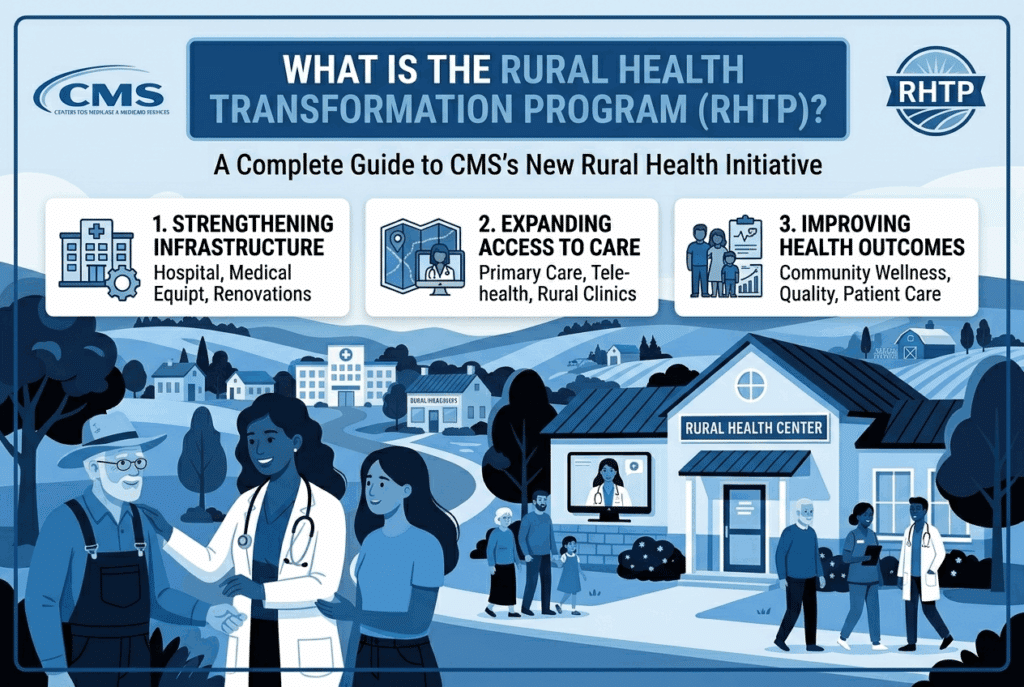
Rural healthcare in the United States has long faced a difficult reality: fewer providers, longer travel times, aging facilities, workforce shortages, and limited access to specialty care. The Rural Health Transformation Program (RHTP) was created to address these challenges with a large-scale federal investment designed to strengthen rural healthcare systems, improve access, and support long-term sustainability.
If you are asking what is the rural health transformation program, the short answer is this: it is a new federal initiative under CMS that gives states funding to redesign and improve rural healthcare delivery. In this guide, we’ll explain what the program is, why it matters, how it works, what problems it is trying to solve, and what rural communities, providers, and stakeholders should know now.
What Is the Rural Health Transformation Program?
The Rural Health Transformation Program (RHTP) is a federal program created to improve healthcare in rural America through state-led transformation efforts. It provides funding to states so they can develop and implement strategies that strengthen access to care, improve outcomes, modernize delivery systems, and support rural providers.
In simple terms, the cms rural health transformation program is not just a grant for hospitals. It is a broad policy and funding initiative aimed at helping rural healthcare systems become more sustainable, more innovative, and better connected to the communities they serve.
The program is especially important because rural healthcare often operates with thin margins, fewer clinicians, and weaker infrastructure than urban systems. RHTP is designed to help states invest in practical solutions such as workforce development, telehealth, chronic disease management, behavioral health access, technology upgrades, and care coordination.
Why the Program Was Created
Rural communities have faced a growing healthcare gap for years. Many rural hospitals have closed, many others are financially fragile, and patients often travel long distances for basic or specialized care. Preventable conditions like diabetes, heart disease, and maternal health complications are also more difficult to manage where care access is limited.
The rural health transformation program rhtp was created to help reverse those trends. It reflects a recognition that rural healthcare needs more than short-term fixes. It needs a systems-level transformation that improves access while also making care delivery more efficient and sustainable.
That is why the program focuses not only on hospitals, but also on prevention, technology, workforce, and new care models. The goal is to create a stronger rural health ecosystem, not just fund isolated projects.
What Is the Big Beautiful Bill on Rural Healthcare?
Many people search for what is the big beautiful bill on rural healthcare because the Rural Health Transformation Program is tied to the federal legislation known as the One Big Beautiful Bill Act. This law authorized the RHTP and established the funding structure that allows billions of dollars to flow to states over multiple years.
In plain language, the “big beautiful bill” is the federal law that made the rural health funding program possible. The RHTP is one of its major healthcare provisions, and it is intended to support rural communities nationwide through strategic investments in care access, innovation, workforce, and infrastructure.
If you are explaining this to a general audience, the simplest version is: the law created the funding; the program decides how states can use it to improve rural health.
How the Program Works
The Rural Health Transformation Program is administered through CMS, but states play the central role in designing the actual transformation plans. That means the federal government sets the framework, and states submit proposals showing how they will use the money to improve rural healthcare.
The funding is distributed over several years and is meant to support long-term change rather than one-time spending. States can use the money for initiatives that align with the program’s goals, such as:
- Improving access to primary and specialty care.
- Strengthening rural hospitals and clinics.
- Supporting prevention and chronic disease management.
- Expanding behavioral health and maternal health services.
- Investing in digital health, telehealth, and remote monitoring.
- Recruiting and retaining healthcare workers.
- Improving care coordination and emergency response.
- Enhancing cybersecurity and health IT infrastructure.
Because each state has different rural challenges, the program allows flexibility. That makes it more adaptable, but it also means outcomes may vary depending on how well each state designs and implements its plan.
Main Goals of RHTP
The rural health transformation program is built around several major goals that address the root causes of rural healthcare disparities.
Improve Access to Care
The program aims to bring services closer to rural residents through expanded access points, better coordination, telehealth, and stronger local providers.
Strengthen Sustainability
Many rural providers operate under financial pressure. RHTP supports efforts that help these organizations remain viable and continue serving their communities.
Support Prevention and Chronic Disease Management
Rural populations often face high rates of chronic illness. The program emphasizes early intervention, education, and better management of conditions like diabetes, hypertension, and heart disease.
Expand Innovation
The program encourages modern tools such as remote monitoring, AI-enabled workflows, digital care delivery, and better data sharing.
Build the Workforce
A major barrier in rural health is the shortage of clinicians, nurses, and support staff. RHTP supports workforce recruitment, retention, and training strategies.
What Are the Issues With Rural Healthcare?
A key part of understanding what is the rural health transformation program is understanding the problems it is trying to solve. Rural healthcare faces several structural issues that have built up over time.
Provider shortages
Rural areas often struggle to attract and keep physicians, nurses, behavioral health professionals, and specialists. This creates long wait times and limited access to care.
Hospital closures and instability
Many rural hospitals operate on very thin margins. Some close entirely, while others reduce services such as labor and delivery, surgery, or emergency care.
Transportation barriers
Patients in rural communities may need to drive long distances to reach a clinic or hospital. This can delay care and reduce follow-up visits.
Higher burden of chronic disease
Rural populations frequently experience higher rates of chronic conditions and more difficulty managing them consistently.
Limited specialty and behavioral health access
Rural residents often have fewer options for mental health, substance use treatment, maternal care, and specialty referrals.
Technology gaps
Broadband limitations, outdated systems, and weak IT infrastructure can make telehealth and modern care delivery harder to implement.
These issues are why the CMS rural health transformation program is being positioned as a long-term solution rather than a temporary aid package.
What Kinds of Projects May Be Funded?
RHTP is designed to support a wide range of rural health transformation efforts. While each state will build its own plan, likely project areas include:
- Telehealth expansion and remote care delivery.
- Chronic disease prevention and management programs.
- Maternal health and prenatal care improvement.
- Emergency medical service coordination.
- Workforce pipeline and retention initiatives.
- Rural clinic modernization.
- Value-based care and care integration models.
- Behavioral health and substance use support.
- Digital health infrastructure and cybersecurity.
- Data-sharing systems across rural providers.
For many states, the strongest proposals will be those that combine multiple strategies rather than focusing on a single issue. The most successful rural health programs usually improve care access, affordability, and sustainability at the same time.
Why This Program Matters for States
For state governments, the Rural Health Transformation Program represents an opportunity to rethink how rural care is delivered. Instead of only funding services, states can use RHTP to build infrastructure that creates lasting improvement.
That could mean better coordination among hospitals and clinics, stronger partnerships with regional systems, smarter use of technology, and more targeted support for high-need communities. States that approach the program strategically may be able to improve health outcomes while also reducing pressure on fragile rural facilities.
For policymakers, the program is also significant because it ties funding to measurable transformation. In other words, the goal is not just to spend money, but to produce visible progress in access, quality, and sustainability.
Why This Program Matters for Rural Providers
Rural hospitals, physician groups, FQHCs, and community health organizations should pay close attention to RHTP because it may shape the future of rural care financing and delivery. Providers that understand the program early may be better positioned to partner with their states or participate in funded projects.
This matters especially for organizations that are already investing in telehealth, population health, care coordination, and digital workflows. Those efforts align closely with the priorities of the rural health transformation program rhtp.
Providers should also think beyond direct funding. In many states, the biggest opportunities may come through partnerships, pilot projects, technology adoption, workforce development, or regional service integration.
What Patients Should Know
For rural patients, the most important takeaway is that the program is intended to improve real-world access and quality of care. If states implement it well, patients may see more local services, better access to specialists, shorter wait times, and improved coordination between providers.
Over time, the program may also support better preventive care and chronic disease management, which can help reduce avoidable complications and hospitalizations. That means better health outcomes and fewer disruptions for families who already face geographic barriers to care.
Challenges and Limitations
Although the Rural Health Transformation Program is promising, it is not a cure-all. The success of the program depends heavily on how states design their plans, how quickly they implement them, and whether the projects are sustainable after funding ends.
There are also real challenges in rural healthcare that funding alone cannot solve immediately, including workforce shortages, broadband gaps, and persistent financial pressure on small hospitals. In addition, because states have flexibility, the quality of results may vary widely from one state to another.
That said, the program still represents one of the most ambitious federal efforts in years to address rural health disparities in a coordinated way.
How to Make the Most of RHTP Opportunities
If you are a provider, health system, consultant, or community stakeholder, the best approach is to focus on alignment. Ask whether your organization can help solve one of the core rural problems the program is designed to address.
That may include:
- Expanding access through virtual or mobile care.
- Improving chronic care outcomes.
- Building workforce pipelines.
- Strengthening digital infrastructure.
- Partnering with neighboring facilities.
- Redesigning care delivery for sustainability.
Organizations that can demonstrate measurable outcomes, community impact, and scalability will likely be the most attractive partners in state-level planning.
Takeaway
If you were searching for what is the rural health transformation program, here is the simplest answer: it is a federal, state-led initiative that gives rural America a major opportunity to improve healthcare access, sustainability, and outcomes. The CMS rural health transformation program is designed to help states solve long-standing rural health problems through innovation, workforce support, technology, and better care delivery.
Frequently Asked Questions About RHTP
What is the Rural Health Transformation Program?
The Rural Health Transformation Program is a federal initiative designed to provide funding to states to improve healthcare access, quality, sustainability, workforce capacity, and technology in rural areas.
What is the CMS Rural Health Transformation Program?
The CMS Rural Health Transformation Program is administered by the Centers for Medicare & Medicaid Services and supports state-led strategies to modernize and strengthen rural healthcare systems.
What does RHTP stand for?
RHTP stands for Rural Health Transformation Program, a multi-year federal funding initiative aimed at improving healthcare delivery and infrastructure in rural communities.
What is the federal law related to rural healthcare transformation?
It refers to legislation that authorized funding and created the framework for improving rural healthcare systems through structured programs like the Rural Health Transformation Program.
Who can benefit from the Rural Health Transformation Program?
Rural hospitals, clinics, community health centers, healthcare providers, and patients can all benefit from improved access, enhanced funding, better infrastructure, and expanded healthcare services.
What are the biggest challenges in rural healthcare?
Key challenges include provider shortages, financial instability of rural hospitals, transportation barriers, higher chronic disease burden, limited behavioral health access, and gaps in healthcare technology.
How can the Rural Health Transformation Program improve rural healthcare?
The program supports telehealth expansion, workforce development, preventive care initiatives, digital health tools, care coordination, and broader service availability to improve overall patient outcomes.
Is the Rural Health Transformation Program only for hospitals?
No, the program extends beyond hospitals and includes clinics, workforce initiatives, care delivery models, technology upgrades, and community-based healthcare services.
Why is healthcare delivery more difficult in rural areas?
Rural healthcare faces challenges due to low population density, limited provider availability, long travel distances for patients, weaker infrastructure, and financial constraints within healthcare systems.
How should states prepare for the Rural Health Transformation Program?
States should evaluate rural healthcare needs, collaborate with stakeholders, define measurable goals, build strong implementation strategies, and focus on long-term sustainability and impact.

Jack Whittaker
Sales leader and high level Operator with a demonstrated history of working in the hospital & health care industry.



Categories
Advanced Primary Care Management→AI & Care Coordination→Behavioral Health Integration→Care Management Programs→Chronic Care Management→Digital Health & Software Solutions→General Remote Care Topics→Medication Therapy Management→Pricing & Business Strategy→Principal Care Management→Remote Patient Monitoring→Remote Therapeutic Monitoring→Transitional Care Management→
Related Blog
- December 3, 2024 | Read Time: 7 mins
Why Digital Health Platforms Are the Cornerstone of Smart Healthcare?
Smart healthcare depends on connected systems. Digital health platforms bring together patient...
Learn More- September 13, 2024 | Read Time: 10 mins
How To Choose the Best Care Management Software
Want to implement care management software into your practice? With the healthcare...
Learn More- March 28, 2024 | Read Time: 7 mins
Improve Clinical Workflows With Virtual Care Management Programs
Virtual Care Management programs, particularly Remote Patient Monitoring (RPM) and Chronic Care...
Learn More