
dddddd
By Sudeep Bath
| January 20, 2026
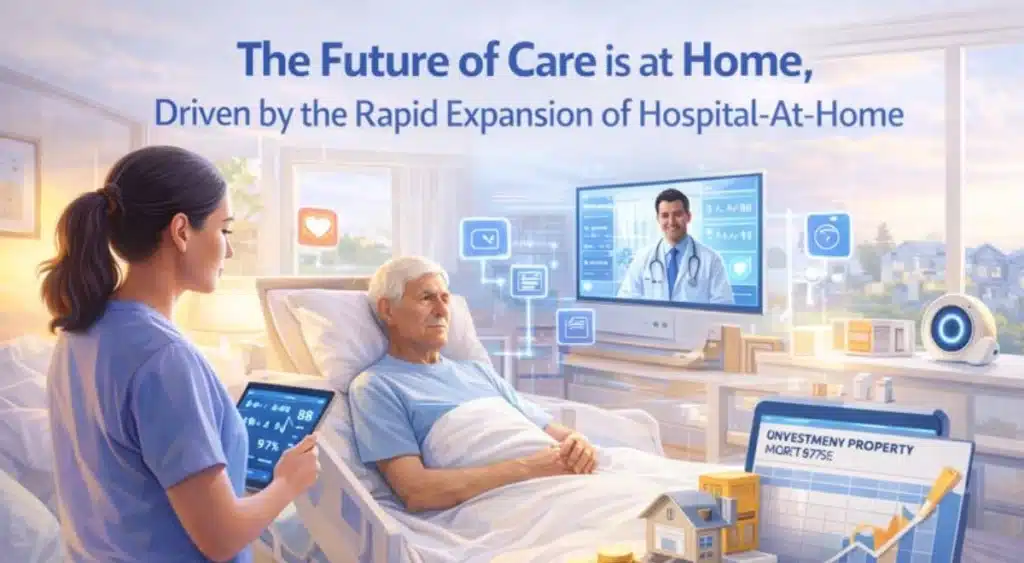
Healthcare is evolving. A model that brings hospital-level services directly into patients’ homes is becoming more common alongside traditional inpatient care, which has been the mainstay of medicine for a long time. This change isn’t just about making things easier; it’s also about getting better results, spending less money, and improving the patient experience. HealthArc is at the forefront of this change. It is a leader in remote patient monitoring and digital care coordination that lets providers provide high-acuity care outside of the hospital.
What is a program for “hospital at home”?
A hospital at home program is a new way to give care that brings hospital-level medical services right to a patient’s home instead of a regular hospital. Thanks to modern clinical standards, remote monitoring technologies, and coordinated care teams, patients get the same quality of care at home as they would in a facility.
Early on in the COVID-19 pandemic, regulatory flexibilities like the CMS Acute Hospital Care at Home waiver helped get hospital-at-home programs up and running faster. This let health systems add more patients while still giving them good treatment. Hospital-at-home initiatives are increasingly a common way to provide value-based treatment that goes beyond only reacting to the pandemic.
Why the hospital-at-home model is important
Hospital at home isn’t just a test run; it’s a proven model with clear benefits:
- Better results in the clinic: Research indicates that patients receiving acute care at home frequently encounter: • Less chance of problems like infections in the hospital • Fewer people are coming back to the hospital.
-
- A shorter overall “stay” time
- Happier patients
This is partly because patients recover better when they are in a place they know and feel less physical and emotional stress than when they stay in a traditional hospital.
- Cost-Effectiveness for Health Systems: Taking care of people at home can save a lot of money for institutions. Many systems say they save a lot of money on staff, infrastructure, and resource use without lowering quality.
- Flexibility in operations: Hospitals can keep their inpatient capacity balanced and avoid bottlenecks by using remote diagnostics and monitoring. This is especially useful during times of high demand, like seasonal surges.
Largest hospital-at-home programs
Some of the largest hospital-at-home programs in the world show the potential scale and impact of this . For example, top health systems have set up in-home acute care pathways for conditions like congestive heart failure, pneumonia, COPD, recovery after surgery, and more. These programs can help dozens of patients at the same time by using remote monitoring and 24/7 clinical escalation protocols.
1.Current Health serves as a prime example.
Current Health works with health systems all over the U.S. to create and grow hospital-at-home models. Their platform allows for real-time monitoring, flexible logistics (like sending out device kits), and 24/7 clinical oversight. This makes it possible for some of the biggest hospital-at-home programs in the country.
The data shows that hospital at home isn’t just a fancy service; it’s a scalable system that can help hundreds of patients in different areas get the same favorable clinical results.
2. The financial Side: Paying for and getting paid back for Hospital at Home
One big question for care providers who are contemplating this model is how billing and reimbursement work.
3.Guidelines for Hospital at Home Billing
Hospital-at-home clinicians need to know about various billing codes, documentation criteria, and payment methods defined by Medicare, Medicaid, and private payers. This is different from how regular inpatient billing works.
Some important things are:
- Doctors need to supervise care and maintain records.
- Codes for managing care over time
- They must provide evidence of clinical oversight that matches the standards of a hospital.
- Use of remote monitoring technology that helps collect and report patient data
This model combines clinical, remote monitoring, and care coordination services, so it often uses RPM (Remote Patient Monitoring) billing codes like CPT codes 99453, 99454, and 99457-99458. These codes enable providers to receive payment for setting up devices, sending data, and spending time with patients remotely.
What Providers Need to Know About Hospital at Home Reimbursements?
Different payers pay different amounts for hospital-at-home care, but more and more they are following value-based care models:
- Medicare Advantage plans often pay for hospital-at-home services as part of their managed care plans.
- CMS waivers and alternative payment models give hospitals the power to get the same amount of money for at-home care as they do for hospital stays, as long as certain conditions are met.
- Insurance companies are also making policies that take into account the cost savings and clinical quality of hospital-at-home delivery. Efficient payment requires proper record-keeping, adherence to billing guidelines, and the integration of clinical processes to ensure providers account for all chargeable care.
Why hospital-at-home software is important
Purpose-built digital platforms are the best because they include the proper Hospital at Home software that is needed for any hospital at home program to work.
Strong software platforms give you:
- Keeping an eye on patients from a distance in real time : Software gets health trends and vital indicators in real time from medical equipment that are connected to it. This lets healthcare teams keep an eye on patients from a distance with great accuracy. This ongoing flow of information is very important for discovering clinical problems early and doing something about them before they get worse.
- Coordinating care and automating workflows: Doctors, nurses, care coordinators, and sometimes remote responders all need to work together properly for hospital at home to succeed. AI-powered software has unified dashboards that make it easy to keep track of tasks, workflows, and clinical paperwork.
- Help with billing and adding codes for CPT: Integrated dashboards make it easier for hospitals to be paid for home care by supporting crucial CPT codes and reimbursement protocols. It works with EHR systems to make sure bills are correct and to cut down on mistakes occurring while entering data by hand.
- How to Get Patients Involved: Not just doctors can use software. Centralized patient portals and engagement technologies enable people keep to their treatment regimens, communicate secure messages, and take better care of themselves, all of which are critical for getting good results.
How Remote Patient Monitoring Works with Hospital at Home
Remote Patient Monitoring (RPM) is not a separate service; it’s the main part of hospital-at-home care.
RPM software and devices:
- Keep an eye on vital signs.
- Let doctors know about worrying trends.
- Cut down on the need for in-person visits
- Give patients control over their care
HealthArc’s RPM modules work with its larger digital care platform to make sure those doctors and care teams always have access to accurate patient data. This is essential for providing safe and scalable hospital-at-home services.
Benefits of Hospital at Home Delivery in the Real World
When a hospital-at-home program is done right with advanced health software both providers and patients benefit:
For Patients
- Patients receive care in a familiar environment.
- Lower chance of getting infections in the hospital
- More comfort and happiness
- More involvement in care for providers
- Lower costs of doing business
- Better management of capacity
- More chances to get paid back
- Better coordination of care
For Health Systems
- Less crowded hospitals
- Models of care delivery that last longer
- Better performance when working under value-based care contracts
How to Start or Grow a Hospital at Home Program: Practical Steps
If your company is thinking about starting or expanding a hospital-at-home program, these are the most important things to do:
- Set up clinic clinical pathways: Find out which types of patients and diagnoses are good for hospital-at-home care. At-home care has been shown to work well for conditions like heart failure, pneumonia, COPD, and post-surgical care.
- Choose the correct Software partner: Select a platform that brings together RPM, care coordination, documentation, and billing workflows. Local hospitals need scalable platform because it is scalable and helps them obtain the most return back from patients.
- Train clinical teams: For things to go well, clinical staff need to know how to use remote monitoring tools, escalation protocols, and documentation workflows.
- Make sure that the billing and revenue cycles are in sync: To receive all eligible reimbursements, even those related to RPM, you should work closely with the revenue cycle teams to set up billing rules.
Conclusion:
Hospital-at-home programs are a new way of delivering healthcare that puts patient outcomes, operational efficiency, and financial sustainability first. More health systems are creating the largest hospital-at-home programs that work because of better technology and payment systems that support remote care.
Visit HealthArc.io to learn how Healtharc can help your organization implement hospital-at-home efficiently and in full compliance with CMS documentation standards.
Watch: How Hospital-at-Home Programs Are Redefining Modern Healthcare
In this video, we explore how hospital-at-home programs are expanding rapidly, improving patient outcomes, reducing costs, and reshaping the future of care delivery.
Frequently Asked Questions (FAQs)
What is a program for hospitals at home?
Instead of going to the hospital, a patient can get hospital-level treatment at home through a hospital-at-home program. It comprises clinical oversight, treatment guidelines, and constant monitoring to make sure that people can safely get acute care outside of the hospital.
What sets hospital-at-home apart from home health?
Hospital-at-home is meant for those who need acute hospital-level care (greater acuity, faster escalation, and tighter monitoring). Home health, on the other hand, is usually for people who are recovering from an acute illness or need long-term help with things like therapy, nursing visits, or chronic care.
How does hospital-at-home work for people?
- supervision of the clinical care team
- visits to the home when needed
- checking vital signs from afar
- quick escalation strategies for symptoms that are getting worse
Is it safe for high-risk patients to stay in the hospital at home?
When eligibility requirements are fulfilled, monitoring is constant, and escalation protocols are explicit, hospital-at-home can be safe for patients who are at high risk. Real-time monitoring and quick response paths are very important for programs to work.
What is making the “care at home” concept expand so quickly?
- a better experience for patients
- better results in the clinic
- less stress on the number of beds available for patients
- more freedom to run things
What kinds of illnesses do people usually get treated for at home?
- heart failure with congestion
- pneumonia
- COPD
- healing after surgery
With careful monitoring and care coordination, many conditions can often be handled at home.
What are the good things about hospital-at-home?
- less infections that people get in the hospital
- fewer times people have to go back to the hospital
- reduced length of stay overall
- more satisfied and comfortable patients
Does hospital-at-home save money?
Yes. Many health systems say that their costs go down because they have less of a burden on their inpatient infrastructure and make better use of their resources. This is true as long as the program is administered correctly.
What is Remote Patient Monitoring (RPM), and why is it important?
Remote Patient Monitoring (RPM) is a way of caring for people where linked devices gather vital signs (such blood pressure, weight, and oxygen levels) and communicate them to a platform for the care team. RPM helps find risks sooner and helps with proactive care management.
In what ways does RPM help hospital-at-home programs?
- Keep an eye on patients all the time
- Find out about bad trends early
- Cut down on visits that aren’t needed in person
- Make patients feel safer and more confident when they get care at home
What kinds of gadgets are usually utilized in RPM and hospital-at-home care?
- a monitor for blood pressure
- Oximeter for the pulse
- Digital scale for weight
Some apps also let you track your temperature and check in on your symptoms, depending on what the patient wants.
What is a care team dashboard for people who live at home?
- trends and vital signs of patients
- warnings and risk flags
- given jobs and duties
- requirements for documentation
It lets teams work together to provide care more quickly and respond more quickly when things get worse.
What are “alerts” in RPM?
When vitals cross a certain level or when trends show that things are getting worse, RPM alerts are system messages that go off. Using trend-based thresholds and triage-based escalation, effective programs cut down on alert fatigue.
How do providers charge for hospital-at-home services?
When paying for hospital-at-home services, you need to follow the rules set by each payer and keep track of clinical oversight, care management activities, and services that are covered. Reimbursement works best when paperwork is organized and workflows are in sync.
What are some popular CPT codes used with RPM?
- 99453 (setting up and teaching how to use the device)
- 99454 (providing devices and sending data)
- 99457–99458 (keeping track of and managing clinical time)
Does Medicare or Medicare Advantage pay for hospital-at-home?
Many programs work with payer-supported models, and managed care techniques commonly include hospital-at-home as part of Medicare Advantage plans. Waivers and different ways to pay have also helped speed up adoption.
Why is it so vital to keep good records in order to get paid?
- proper clinical supervision
- care given at the right level
- following the rules for billing
- how correct the reported services are
This cuts down on denials and helps get the right amount of money back.
What should hospital-at-home software have?
- monitoring in real time and seeing trends
- automating workflows and managing tasks
- help with clinical documentation
- workflows for billing and getting paid
- tools for talking to and getting patients involved
How does hospital-at-home make it easier for doctors and nurses to accomplish their jobs?
Hospital-at-home software helps teams cut down on manual follow-ups, speed up reaction times, and coordinate better across roles by putting vitals, tasks, notifications, and documentation in one place.
What are the hardest parts of making hospital-at-home programs bigger?
- checking to see if patients are eligible
- gadget logistics and getting started
- protocols for escalation
- training personnel and getting them to use it
- correctness of documentation and reimbursement
Scaling works best when workflows, technology, and revenue cycle processes all work together.
What key performance indicators (KPIs) should healthcare leaders keep an eye on to make sure that hospital-at-home works?
- going back to the hospital
- rates of escalation and time to respond
- how long you stay
- how happy the patient is
- less use (ED/inpatient)
- cost per event
- full documentation and billing capture
What are some useful steps to start or grow a hospital-at-home program?
- Determine patient eligibility and clinical paths.
- Set up workflows for RPM, coordination, and documentation.
- Teach teams how to escalate and follow the rules
- Make sure that billing and revenue cycle processes are in sync

Sudeep Bath
Sales & Tech Leader with 22+ years of experience Former SVP for $37B PE portfolio company Advisor and Board member in number of startups



Categories
Advanced Primary Care Management→AI & Care Coordination→Behavioral Health Integration→Care Management Programs→Chronic Care Management→Digital Health & Software Solutions→General Remote Care Topics→Medication Therapy Management→Pricing & Business Strategy→Principal Care Management→Remote Patient Monitoring→Remote Therapeutic Monitoring→Transitional Care Management→
Related Blog
- February 27, 2026 | Read Time: 11 mins
What Is the CMS Access Model? A Complete Guide for Healthcare Providers
The CMS Access Model represents a significant shift in how Medicare reimburses...
Learn More- February 13, 2026 | Read Time: 8 mins
CPT 99445 and 99470: Complete 2026 Guide to Short-Window RPM Billing with HealthArc
CPT 99445 and CPT 99470 are transforming how practices bill for Remote...
Learn More- December 24, 2025 | Read Time: 7 mins
What Is Patient-Centered Care? Benefits, Key Principles, and Real-World Examples
Patient-centered care is one of the most important ideas shaping how healthcare...
Learn More