
dddddd
By Sudeep Bath
| December 19, 2025
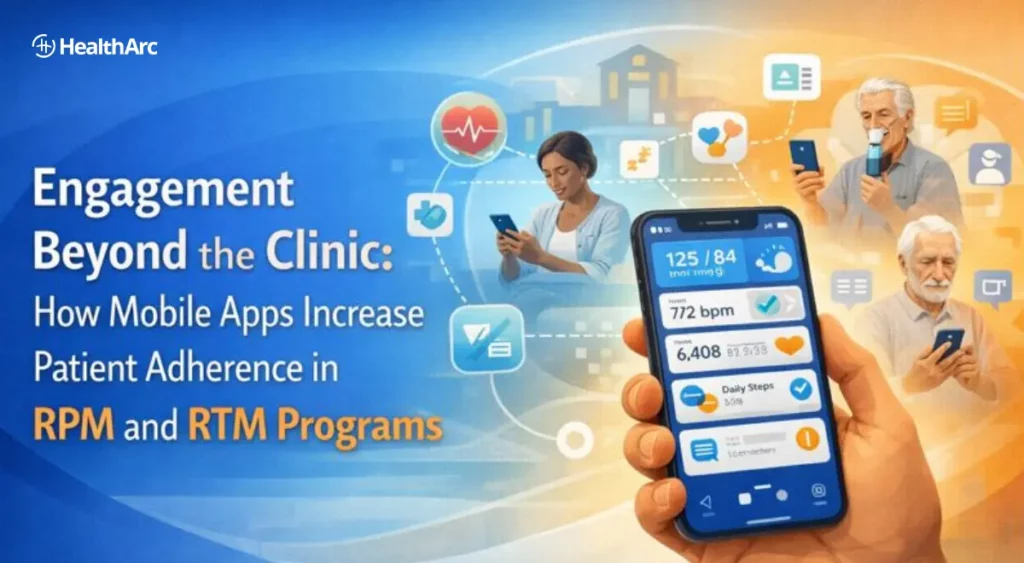
Through the introduction of Remote Patient Monitoring (RPM) and Remote Therapeutic Monitoring (RTM) into the healthcare system across the U.S., significant advancements have been made in remote care. The primary measurement used to evaluate the impact of RPM and RTM on patient care and treatment remains unchanged, i.e., patient adherence.
Though several advancements in remote care management took place right from its inception to date, nothing impacts or will impact patient adherence in any way. The increased access to remote care through mobile applications provides an opportunity for patients to be instructed, reminded, mentored, supported, monitored, and followed up with in the comfort of their own homes. This in-home care access has played a vital role in bridging the existing communication gap between the clinical and non-clinical staff, which directly impacts patient recovery.
RPM and RTM require a high level of active patient engagement for remote care programs to be clinically effective. Without this level of engagement, they rather become passive data programs instead of active clinical examinations.
By employing digital adherence mechanisms, RPM and RTM evolve into continuous care models and create opportunities for a dramatic change in patient care and treatment of chronic conditions.
This blog explains the measurable increase in adherence, clinical outcomes, billing reimbursement, and long-term commitment that are made possible with healthcare mobile applications, like HealthArc, as well as how technology-based engagement creates synergies that were not previously possible with traditional care models.
Why Engagement Defines RPM & RTM Success
The effectiveness of a remote care program relies not only on the formulation of a successful remote care delivery system, via FDA-approved devices and equipment, but also on the patient’s adherence and compliance with the treatment plan.
Patients who remain compliant and actively engaged in managing their treatment plan show statistically better improvement in managing their chronic diseases, while inactive patients experience deterioration in their medical condition, increased hospitalizations, increased chances for premature death, and/or discontinuation of therapy.
Both RPM and RTM programs require that the patients remain compliant with their unique treatment plans.
Mobile Applications Enable Continuous Clinical Guidance & Support
In the modern day healthcare landscape, traditional physician-patient encounters are usually sporadic and based upon occasional doctor visits. After leaving the clinic, patients are often left with either a manually written or printed list of instructions and/or treatment options, which may not always be clearly explained or remembered.
Through mobile technology platforms, patients are provided with continuous reinforcement of their care plans with recurring daily reminders, prescription guidance, digital coaching, and patient-specific guided workflows that help promote patient engagement.
Healthcare mobile applications promote the transformation of traditional episodic clinical models into a more cohesive, holistic approach to the ongoing management of chronic disease. As a result, there is enhanced effectiveness of the intervention and reduced attrition among chronic patients.
How Digital Reinforcement with a Mobile App Affects Patient Behavior
Patient adherence is more of a behavioral problem than it is a clinical issue. When digital technology reinforces Behavioral Health Integration (BHI), compliance rates will increase significantly. Mobile app technology allows:
- Automatic reminders
- Simplified therapeutic action
- Motivational coaching
- Encouragement to succeed
Behavioral reinforcement becomes particularly important in the long-term management of chronic conditions when many patients are dealing with fatigue or difficulties with compliance and multiple comorbidities.
- Increases Clinical Visibility with Real Time Monitoring
The availability of real-time data provides the opportunity for providers to develop and deploy care plans in real time. Clinicians can use biometric data to predict potential risk; in cases where vital signals and/or symptom trends demonstrate the potential for decline, providers can provide intervention prior to clinical decline.
The outcome of real-time monitoring is that it allows for early intervention, which leads to improved clinical decisions, decreased numbers of emergency visits, and the ability to confidently follow chronic disease management plans.
- Daily Compliance Boost Through Mobile Notifications
Recent studies indicate that forgetting to adhere to treatment is one of the primary reasons patients do not comply with their therapeutic plans. Digital reminders are a form of strategy used for prompting or reminding patients of actions, such as:
-
- Logging their vitals
- Documenting their symptoms
- Performing their daily exercise regimen
- Reporting any variations in pain levels
- Adhering to their prescribed treatment plans
Since patients receive frequent nudges and reminders, the likelihood of developing a pattern of healthy behavior increases.
- Motivates Patients By Visualizing Progress
Seeing consistent improvement in health metrics, such as blood pressure, BMI, level of pain, pulmonary conditions, etc. motivates patients to try even better. Digital graphs available on mobile apps allow patients to easily visualize their own health journey, increasing their level of satisfaction with progress, increasing respect for their compliant behavior, and increasing the likelihood that they will continue to engage in a compliant manner.
Patients are often more motivated to seek medical care for chronic diseases when they can visibly “see” their health improvement because chronic diseases slowly evolve rather than rapidly change.
- Personalized Patient Education and Support for Self-Management
Digital apps and other resources, including computer or Internet-based tools, provide patients with personalized education and guidance regarding their specific disease condition. When patients understand the history of their disease, how the treatment works, and how to self-manage their condition, compliance with their therapy increases.
Access to patient education results in improved self-management, which, in turn, reduces the risk of developing complications related to the common chronic diseases.
- Supports Preventive Care & Medicine
Remote care enables healthcare providers to identify issues before they result in worsening health. The use of mobile alerts, symptom submissions, and automated assessment tools enables providers to take proactive measures earlier.
Using Remote Patient Monitoring (RPM) and Remote Therapeutic Monitoring (RTM) provides the best benefits regarding preventive care and support.
- Enhances Communication Between Patients and Providers
Mobile communication allows patients to be involved in their healthcare experience even when they are not in the doctor’s office. Patients are more likely to adhere to their physician’s guidance and maintain treatment compliance when they know they are being listened to and supported.
Mobile messages, symptom logs, and remote check-ins provide patients with accountability and clinical support to assist them in adhering to treatment plans.
- Reduces Hospitalizations & Emergency Visits
Preventable readmissions are one of the largest and most expensive burdens on the healthcare system in the USA. By identifying the patient deterioration at an early stage of progression, it is possible to implement interventions to reduce the need for emergency escalation of the patient’s clinical condition.
Ongoing remote care provides a means of preventing medical crisis rather than just a reporting mechanism of when a patient is actually in crisis.
- Increases Accessibility of Care to Chronic Patients
Patients living in rural locations, older adults, patients of low socioeconomic status, and those unable to travel to access care rely more on remote care than traditional access to care.
Mobile applications provide wider access to care by allowing patients to access care through their mobile device, regardless of socioeconomic status or geographic location.
- Transforms Chronic Care Through Mobile Platforms
The model being adopted for the management of patients with chronic care needs is shifting from periodic visits or referrals to constant intervention. The use of mobile applications provide the ability to manage continuity of care for the chronic patient population, as well as providing continuity of care that is consistent with their clinical needs.
Mobile applications support the transition toward value-based reimbursement and accountable care measures and procedures throughout the healthcare industry.
- Documents Reimbursement by the CMS
RPM and RTM reimbursement depend upon complete and exhaustive documentation. Mobile technology provides automated documentation of clinical records, timestamps, engagement events, and therapeutic reporting. It eases the clinical workflow of the provider by facilitating accurate billing and reducing the administrative strain on providers.
Ultimately, mobile technology leads to the ongoing sustainability of reimbursement.
Comparing RPM and RTM Engagement
RPM measures the patient’s vitals through devices, whereas RTM allows the patient to report on their adherence, pain, improvement in activities related to their musculoskeletal health, and completion of their therapies.
Simply put, the patient’s engagement in RPM is based primarily on their usage of connected medical devices and the biometric readings that they produce.
In contrast, RTM focuses on measuring a patient’s engagement in response to their treatment plan through the use of patient-reported information, specifically for musculoskeletal or respiratory issues. For example, patients will regularly provide their treatment providers with updates regarding their:
- Pain levels
- Adherence to the prescribed therapy
- Improved range of motion
- Functional capabilities (e.g., walking, lifting, moving)
- Symptoms of shortness of breath
- Completion of prescribed home exercise programs
As a result, RTM relies heavily on the patient to provide the information that the provider needs to monitor their progress.
Digital health platforms or mobile applications support these efforts because RTM relies on the patient’s frequent input as opposed to the data generated by automated digital medical devices. In short, RPM provides insight into how a patient is medically progressing over time, while RTM provides insights into how a patient is using their prescribed therapies.
Role of Mobile Engagement for Tracking Patient Adherence
Digital tracking via a mobile application helps providers track how a patient is responding to therapy on a continual basis and how well they are progressing toward achieving their therapeutic goals.
- Ability to report pain scores throughout the treatment plan
- Track progress in treatment
- Understand the functional gains the patient has made
- Know if the patient is participating in therapy
- Know how well the patient is recovering after a procedure
With these tracking markers, providers can develop therapies that are tailored to the individual patient’s needs, rather than develop a general recommendation.
Implementing Mobile Engagement into the Clinical Workflow
To reap the most benefits from RTM, mobile engagement should integrate directly with:
- An Electronic Health Record (EHR) System
- Care Coordination Platform
- Clinical Alerts
- Patient Dashboards
- Triage Protocols
- Clinical Escalation Workflows
By integrating these systems into a single, easy-to-use platform, providers can achieve the highest level of operational efficiency while also eliminating the need to create an additional administrative burden.
Choosing a Mobile-Enabled RPM/RTM Platform
When choosing a reliable mobile application, healthcare providers in the United States should look for the following capabilities within an RPM/RTM system:
- An easy-to-use mobile application for patients
- Connected devices
- Automated documentation
- Support for CMS codes
- Clinical dashboards
- Integration into staff workflows
- Analytics on a population level
- Detection capabilities through artificial intelligence
Since not all RPM vendors provide advanced capabilities for RTM, it is necessary for healthcare decision-makers to evaluate vendors on clinical criteria, and not simply on technology. The best platforms turn patient interactions into actionable health information.
The Impact of Mobile Technology on Value-Based Care
As the U.S. healthcare system continues to shift toward value-based care, adherence will ultimately be the most significant factor in chronic care outcome performance. Mobile platforms will assist healthcare providers in meeting the quality benchmark requirements of value-based care while also helping them decrease the costs associated with high-cost utilization.
Mobile engagement has become a requirement for making any RPM or RTM program effective, as it helps support patients through reinforcement of therapeutic instructions, increased adherence behaviors, and continuous connection to the clinical environment. Through the use of mobile platforms, RPM and RTM programs have shown measurable improvements in outcomes among patients with chronic conditions throughout the United States.
Frequently Asked Questions to Clear Your Doubts
Q1. Do Mobile Applications Enhance Patient Compliance With Their Treatment Plans?
Mobile technology allows for digital reinforcement through reminders, symptom tracking, etc., and will increase levels of patient participation dramatically as either RPM or RTM using a mobile app.
Q2. Is It Possible to Use a Mobile App to Meet the Billing Requirements of RTM?
RTM requires documentation of engagement and therapy data; Mobile Technology allows for automated tracking of those items and guarantees compliant documentation to the CMS.
Q3. Which Patients Will Benefit From the Use of Mobile Apps?
Patients with chronic diseases such as hypertension, diabetes, COPD, chronic pain, CHF, orthopedic recovery, and musculoskeletal rehabilitation can benefit from the RPM and RTM mobile apps.
Q4. Do Mobile Applications Decrease the Number of Times a Patient Is Readmitted to a Medical Facility?
Remote monitoring via mobile applications enables earlier intervention to prevent the progression of disease and reduce emergency room visits.
Q5. Will Mobile Applications Replace Clinical Care?
No. Mobile applications fill in the time between appointments by supporting rounding to improve continuity of care and reduce treatment gaps for patients and providers.
About HealthArc- Unified Healthcare Platform You Can Rely On
HealthArc is a fully integrated Remote Patient Monitoring and Remote Therapeutic Monitoring system for healthcare providers in the United States. HealthArc’s mobile apps, connected devices, clinical dashboard, automated workflows, and tools for CMS documentation allows providers to deliver clinically aligned and patient-centered scalable remote care to their patients.
By integrating HealthArc with their existing EHR, providers can increase patient engagement, improve patient experience, reduce clinical workloads, enhance patient outcomes, and expand the revenue possibilities of delivering remote care by providing a fully integrated digital ecosystem that supports long-term chronic care transformation.
Please request a free demo to learn about how we can help your organization achieve its patient care and management goals. Also, feel free to talk to our team at +201 885 5571 for any queries.

Sudeep Bath
Sales & Tech Leader with 22+ years of experience Former SVP for $37B PE portfolio company Advisor and Board member in number of startups

Categories
Advanced Primary Care Management→AI & Care Coordination→Behavioral Health Integration→Care Management Programs→Chronic Care Management→Digital Health & Software Solutions→General Remote Care Topics→Medication Therapy Management→Pricing & Business Strategy→Principal Care Management→Remote Patient Monitoring→Remote Therapeutic Monitoring→Transitional Care Management→
Related Blog
- January 20, 2026 | Read Time: 13 mins
The Future of Care is at Home, Driven by the Rapid Expansion of Hospital-At-Home Programs.
Healthcare is evolving. A model that brings hospital-level services directly into patients'...
Learn More- December 24, 2025 | Read Time: 7 mins
What Is Patient-Centered Care? Benefits, Key Principles, and Real-World Examples
Patient-centered care is one of the most important ideas shaping how healthcare...
Learn More- December 15, 2025 | Read Time: 10 mins
G2211 CPT Code: Complete Description, Billing Guidelines & Reimbursement
G2211 CPT code is an add-on HCPCS code that lets you capture...
Learn More