
dddddd
By Sudeep Bath
| February 3, 2026
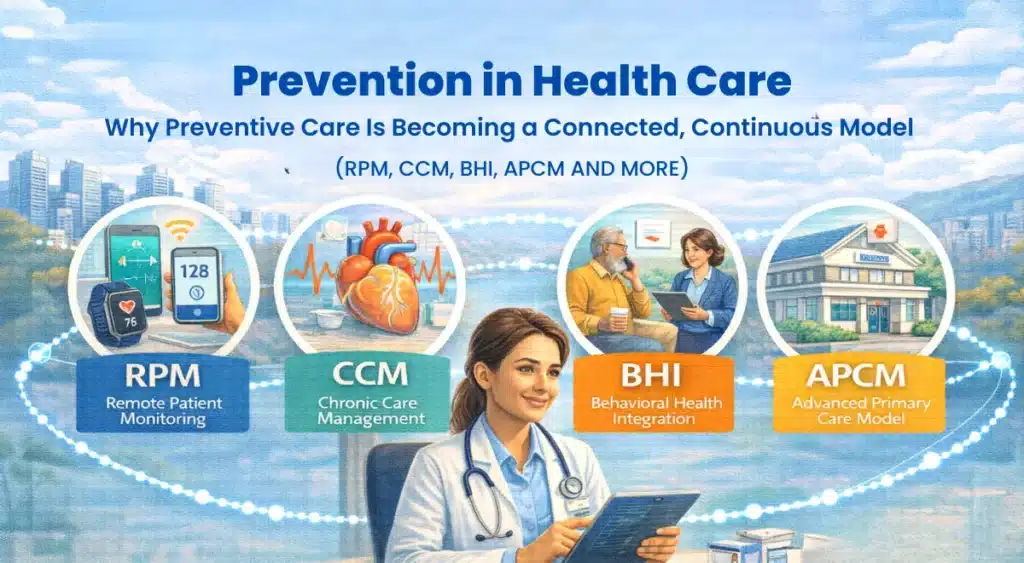
People typically associate health care prevention with their annual physical exams and their scheduled vaccinations and their routine medical screenings. The fundamental elements of preventive care continue to be vital but the practice of preventive care must adapt to present healthcare conditions which include increasing chronic diseases and better healthcare accessibility and insufficient medical staff and patients who need preventive medical services instead of treating their conditions after they become severe.
The future of preventive healthcare will advance past traditional yearly medical checks because it will adopt a connected healthcare system which employs digital care programs to minimize risks and detect health issues at an earlier stage and promote sustained wellness. The service lines of modern primary care facilities now incorporate Remote Patient Monitoring (RPM) and Chronic Care Management (CCM) and Behavioral Health Integration (BHI) and Primary Care Management (PCM) and Advanced Primary Care Management (APCM) and Transitional Care Management (TCM) and Remote Therapeutic Monitoring (RTM).
The current objective requires more than prevention promotion because it needs the creation of functional prevention systems. The detection of patients at early stages for stability maintenance until their scheduled appointment becomes possible through established workflows and data systems and structured programs which enhance preventive care effectiveness.
Preventive Health Care Definition: What Preventive Care Really Means Today
To build a modern approach, it helps to start with a simple preventive health care definition. The primary goal of preventive care protects patients from illness while healthcare providers detect health problems early to prevent major complications from occurring. The definition of preventive care includes both clinical screenings and immunizations and the on-going activities which maintain patient stability throughout time particularly for patients with chronic diseases and behavioral health conditions.
More businesses now recognize that preventive health care consists of various services which extend beyond a single service. It is a system. The system includes multiple components which work together for early disease identification and continuous patient tracking and active patient participation and drug compliance assistance and scheduled medical check-ups and sustained healthcare management. Health care prevention serves as a vital component which supports the successful implementation of primary care transformation and value-based care strategies.
Healthcare organizations run prevention programs which operate as independent events that cause patients to develop uncontrolled risk patterns. Patients who receive preventive healthcare as an on-going program experience continuous support which helps their health condition stay stable instead of worsening.
What is Preventive medical care? A Clinical view that goes beyond screenings
People in the public domain frequently seek to understand what constitutes preventive medical care. Preventive medical care consists of clinical interventions which help patients avoid diseases while they lower their risk elements and detect health problems at stages which enable treatment to produce better results. The main concept involves delivering evidence-based medical care which prevents complications from developing.
Organizations which establish permanent care systems will obtain superior results from their preventive medical care programs when implemented in actual operational environments. The majority of patients who face high risk will experience their condition worsens outside of the clinic environment during periods when they are not receiving medical care. Blood pressure creeps up. Weight trends change. Symptoms build. Anxiety and depression deepen. Medications stop being taken regularly. These are the “invisible” risk signals that often go unaddressed in traditional care models until an avoidable emergency happens.
The current development of preventive healthcare depends on RPM and CCM and behavioral health integration programs which enable primary care providers to take preventive measures instead of treating patients who have already developed their conditions.
The current development of health care prevention methods exists because human disease progression rates for chronic diseases have changed from previous times.
The rise of chronic disease is the biggest reason prevention in health care is becoming a strategic priority. The treatment of chronic medical conditions including hypertension and diabetes and COPD and obesity and heart failure requires more than a single doctor visit. The patients require on-going stability with on-going surveillance and scheduled reinforcement because they must handle various obstacles which include their professional obligations and family obligations and restricted access to medical care.
Traditional preventive care models often depend on clinic visits that happen only a few times per year. Patients who have on-going chronic medical conditions need to visit their doctor more often because their medical needs surpass the standard appointment intervals. The system operates in a reactive mode whenever monitoring gaps appear in the system. By the time a clinician sees the patient again, the patient may already be trending toward complications.
Preventive care is most effective when it becomes continuous. Connected digital programs serve as the solution which addresses this specific need. The system displays all essential patient vital signs which it shows in real time. The CCM system allows healthcare providers to check patients more often while developing individualized treatment plans. BHI provides mental and behavioral health support as an extension of its existing service offerings. The APDM and PCM systems implement modern primary care management systems which organizations can use in their everyday operations. TCM offers patients continuous medical services which enable them to receive care between various healthcare organizations. The RTM system allows healthcare staff to monitor how well patients follow their treatment plan and their progress in achieving functional goals.
These programs operate as preventive programs. They serve as tools which enable preventive healthcare organizations to measure their work while expanding their services.
Preventive Health Care Examples: The Traditional Model Vs the Modern Model
Most people identify preventive health care through its standard services which include flu shots and annual check-ups and cholesterol screening and cancer screening and wellness visits. Those remain important. The present preventive healthcare system functions as an operational framework which monitors patient risk levels and performs outreach work and provides early intervention services between regular medical check-ups.
Blood pressure screening serves as an example of preventive care which people can access. But blood pressure control is preventive healthcare in action. The main distinction exists in the provision of on-going assistance. The blood pressure readings at a clinic visit can be normal for a patient but the person may develop increasing blood pressure at home because of home stress and sleep disturbances and medication non-compliance and their daily habits. The system fails to detect new patterns because it does not continuously monitor data which leads to delayed discovery of these trends for several months.
Similarly, depression screening is preventive care. The success of preventive healthcare for mental health and well-being requires on-going behavioral health support and symptom tracking and follow-up appointments and coordinated referral services. The separate management of behavioral health and physical health leads to negative results which will affect patient health results during extended periods. The implementation of prevention systems produces superior results.
The most effective preventive health care examples at present follow a structured method to prevent health issues instead of presenting them as basic medical interventions.
The “Connected Prevention” Model: Why Preventive Healthcare Now Links to RPM and CCM
The healthcare system now uses connected prevention to deliver preventative medical services in a new way. The new method produces better results than conventional medical treatments because it merges medical data evaluation with modern technological systems and organized healthcare systems to stop disease advancement.
The situation requires Remote Patient Monitoring (RPM) and Chronic Care Management (CCM) systems to execute its plan. The RPM system enables patients to monitor their health data through connected home devices which track blood pressure and pulse and weight measurements. After that, this information is transmitted to the care team so they may look for patterns and find unusual things. The system enables users to obtain their feedback through a fast process. The care team needs to start their intervention immediately when risk indicators appear because these indicators do not need any delay before their scheduled follow-up visit.
CCM helps patients with numerous chronic illnesses by making it possible for systematic ongoing care management. The system enhances all aspects of patient care through its improved methods for creating care plans and conducting medication reviews and scheduling follow-up appointments and enabling patient participation. Remote Patient Monitoring (RPM) and Chronic Care Management (CCM) operate as a single system which provides preventive care through their combined efforts. The system operates to detect potential issues at their onset which enables patients to maintain their health status.
The strategy uses daily preventive care as its method to replace the conventional annual medical check-ups. BHI functions as a fundamental preventive tool which health care and behavioral health organizations must use because it provides essential prevention methods.
Behavioral health is becoming a required part of preventive health care. The results of chronic diseases depend on how much stress and anxiety and depression and sleep disturbances and social difficulties affect patients. Behavioral health issues are common in primary care, but they don’t get enough attention since there aren’t enough specialists and the workflows are broken up.
The implementation of Behavioral Health Integration (BHI) within coordinated primary care systems enhances prevention capabilities through its behavioral care services. The system enables clinical teams to perform structured screening procedures and track patients while they stay connected with patients and achieve successful medical team coordination. The system produces three main benefits which include reduced unnecessary conflicts and patients following their treatment schedules and active participation in their care.
BHI serves as a preventive care tool which addresses the hidden mental and behavioral issues that cause patients to skip medical tests and stop their medications and struggle with their chronic diseases. Primary care facilities should implement mental health services as an extension of their current preventive medical services which operate from their facilities.
APCM and PCM: Structured Primary Care is the new foundation of Preventive Healthcare
The healthcare system needs better operational systems for preventive care because value-based care now dominates the industry and chronic diseases have become more complicated. The practice structure develops through the implementation of APDM (Advanced Primary Care Management) and PCM (Primary Care Management). The system enables preventive workflows because it allows the practice to execute large-scale proactive care operations.
The two methods differ in their methods to deliver preventive care services. The system operates through established protocols which replace clinician-dependent memory for detecting all patients who need follow-up care. The system supports care delivery through established procedures which help doctors track vulnerable patients and their scheduled appointments and maintain regular patient contact and consistent medical care.
The APGM and PCM serve as essential guidelines because prevention programs fail because of insufficient direction. The system fails because it does not have enough resources and it does not support the normal operations of the system. These programs enhance preventive healthcare through their development of sustainable healthcare systems which enable care teams to handle big patient groups successfully.
TCM: Transitional Care Management functions as a preventive care accelerator.
Many of the most dangerous care gaps happen after a hospital discharge. Healthcare organizations need to start taking immediate steps which will stop this preventable failure from happening. Patients who leave inpatient facilities must deal with new medications and they struggle to understand their post-discharge schedule and they remain unclear about their symptoms. Healthcare providers who miss their scheduled follow-up checks will cause the deterioration process to speed up.
The Transitional Care Management (TCM) preventive care tool enables patients to stay safe from post-discharge complications while minimizing unnecessary hospital readmissions. The system allows healthcare providers to start early follow-up assessments while they verify medications and create an organized coordination system during this critical period.
From a preventive health care definition standpoint, this is prevention at its most urgent. It is not prevention of disease onset. The primary goal of this intervention exists to protect patients with fragile medical conditions from deteriorating into more severe conditions that require advanced medical treatment.
Primary care teams who approach transitions as preventive care opportunities will achieve substantial better results.
RTM: Remote Therapeutic Monitoring and Prevention through Adherence
Remote Therapeutic Monitoring (RTM) introduces a new method for disease prevention which tracks how patients follow their treatment plans and their recovery milestones. The practice of prevention requires more than laboratory tests and vital sign measurements in most situations. The process requires healthcare providers to ensure their patients follow their assigned rehabilitation plans and therapy sessions and maintain their medication schedule and learn effective symptom management techniques.
RTM makes it easier to keep track of how well a patient is doing and how well they are following their treatment plan. The system enables healthcare providers to start intervention procedures at an earlier stage when treatment plans fail to produce desired results. The treatment method works to stop symptom progression while it decreases the length of recovery time and minimizes the amount of time patients need to stay functionally impaired. RTM is especially important now as health care is moving away from the clinic and toward a more continuous type of care delivery. The operational elements which cause preventive care system breakdowns continue to prevent the system from achieving its desired outcomes.
The best preventive care guidelines become ineffective when operational systems fail to function properly. The main reasons which lead to preventive healthcare system failures stem from operational problems instead of medical conditions. Primary care teams face a shortage of time to actively pursue all uncompleted screening tests and monitor all uncertain test results and handle all patients at elevated risk because they lack organized care management systems. Patients want to prevent their conditions but they must overcome multiple obstacles which include restricted access to care and their professional duties and their ability to understand medical information.
The system fragmentation leads to delayed or missing essential data which makes it impossible to deliver effective preventive care. The care team remains unaware about upcoming appointments and completed treatments performed outside their network and home environment changes between scheduled visits.
Health care prevention delivery needs connected care platforms to operate with structured care programs. The modern preventive model needs operational clarity and continuous monitoring and scheduled follow-up care to achieve its goals.
A Clean Preventive Healthcare Framework for Primary Care Teams
A preventive healthcare system which operates at scale needs to have an organized framework. The four core components of a system make up prevention which successful practices implement as their main program.
The first step involves preventive need assessment through patient history review and screening schedule evaluation and risk score assessment and chronic condition profile analysis to determine present patient needs. This includes both preventive services and chronic condition management steps.
Second, they connect with patients by using active outreach methods and educational programs and reminder systems which enable patients to easily complete their tasks. The system fails to prevent problems from happening because patients need to handle all aspects of their medical treatment.
Third they track patient risk indicators which appear between scheduled medical appointments. The detection processes becomes possible through RPM and RTM systems which operate with continuous follow-up workflows. The process of this step converts prevention from an annual practice into a continuous on-going process.
The system provides early intervention through its care team which performs medication optimization and care plan modifications and behavioral support and symptom escalation procedures when patient readings or symptoms deteriorate. The framework provides preventive care with a system-based infrastructure which enables expansion at different levels.
Preventive Care and Revenue: Why Programs Must Be Sustainable
The fundamental development of preventive healthcare needs prevention to establish enduring sustainability because medical achievements have reached the same level as environmental sustainability. Practices need to create structured models which will fund their prevention activities. The programs CCM, RPM, APCM, PCM, TCM, RTM and BHI hold importance because of this reason. They serve as clinical frameworks which also function as therapeutic approaches. The operational programs function as organizational support systems which help businesses run their daily operations and achieve sustainable business stability.
Sustainable prevention results in the development of permanent prevention methods which maintain their effectiveness throughout multiple years. The system operates as a reactive system because it fails to maintain consistency in its operations. The healthcare industry now uses preventive care delivery models which provide coordinated service lines with continuous patient interaction and quantifiable results and dependable operational backing. Health care prevention has evolved into an enterprise strategy because of this transformation.
The delivery of preventive healthcare services now operates as a permanent system which delivers patients with connected and coordinated medical care.
The preventive care field now includes more than its traditional focus on scheduled medical tests and disease screening procedures. The future of preventive healthcare depends on connected continuous healthcare delivery which operates through contemporary primary care systems. Prevention in health care is now built around RPM for real-time monitoring, CCM for chronic patient stability, BHI for behavioral health integration, APCM and PCM for scalable proactive care operations, TCM for post-discharge prevention, and RTM for therapy adherence support.
Modern healthcare facilities now have the ability to create preventive care methods because their patient numbers with chronic diseases continue to grow and their staff numbers have decreased. The most effective preventive care approach functions independently from patient perfection in following instructions and from having unlimited access to clinic services. The system needs three fundamental elements which consist of early detection systems and follow-up programs and intervention methods that function as proactive measures.
HealthArc provides connected preventive care through its system which includes real-time monitoring and care team dashboards and workflow-driven programs for RPM, CCM, BHI, TCM, PCM/APCM and RTM.
Frequently Asked Questions (FAQs)
What is preventive care?
Preventive care consists of medical services which help stop diseases from developing while doctors use screenings and immunizations and monitoring and follow-up visits to detect diseases at an early stage and minimize potential complications.
What is the preventive health care definition?
Preventive health care delivers medical services which enable patients to preserve their health condition while doctors identify early warning signs of illness to achieve improved treatment outcomes and reduce potential future health problems.
What is preventive medical care?
Preventive medical care consists of evidence-based clinical services which help patients avoid risks while detecting health issues at their beginning stages through screening tests and counseling sessions and vaccination programs and continuous medical supervision.
What are some instances of preventive health care?
The preventive health care services include wellness check-ups together with vaccines and cancer screenings and blood pressure checks and diabetes tests and mental health evaluations and chronic condition monitoring.
RPM functions as a preventive healthcare tool which enables healthcare providers to deliver preventive care.
Remote Patient Monitoring enables preventive healthcare through home-based vital sign monitoring which helps doctors identify early warning signs of deteriorating health conditions and enables them to intervene before conditions deteriorate.
CCM implements what changes to preventive care services for patients who have chronic medical conditions?
The Chronic Care Management program provides better preventive care to patients who have multiple chronic diseases because it enables healthcare providers to create treatment plans and schedule follow-ups and medication reviews and patient participation.
Why is mental health crucial for prevention?
The way people follow their treatment plans and their daily activities and their chronic disease stability and their self-care participation all depend on behavioral health. BHI implements behavioral support as an addition to primary care services which prevents patients from experiencing deteriorating health conditions.
What specific health benefits does TCM provide to patients after they finish their hospital stay?
TCM reduces the chances of patients needing readmission and developing post-discharge complications through its implementation of post-discharge care protocols which include follow-up appointments and medication verification and prompt treatment initiation.

Sudeep Bath
Sales & Tech Leader with 22+ years of experience Former SVP for $37B PE portfolio company Advisor and Board member in number of startups

Categories
Advanced Primary Care Management→AI & Care Coordination→Behavioral Health Integration→Care Management Programs→Chronic Care Management→Digital Health & Software Solutions→General Remote Care Topics→Medication Therapy Management→Pricing & Business Strategy→Principal Care Management→Remote Patient Monitoring→Remote Therapeutic Monitoring→Transitional Care Management→
Related Blog
- January 14, 2026 | Read Time: 12 mins
What Is a Care Manager? Roles and Responsibilities
A care manager is a dedicated healthcare professional who helps patients navigate...
Learn More- August 5, 2025 | Read Time: 24 mins
What is Chronic Care Management: A Complete Guide 2025
Every patient counts when you operate a small healthcare facility. However, patients...
Learn More