
By Sudeep Bath
| May 8, 2026
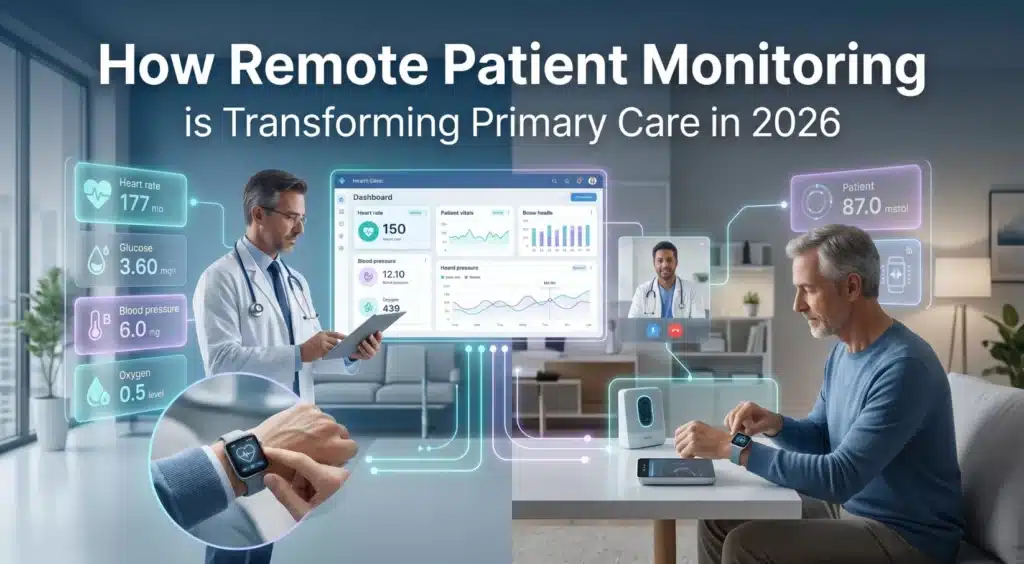
As of 2026, primary care does not only exist within the walls of clinics but primarily through the use of technology and innovation. Currently, more than 60% of all primary care practices in United States have incorporated Remote Patient Monitoring (RPM) into their practice. This shift has changed the way providers identify, treat and manage chronic conditions, in addition to providing physicians with a means to have access to patients even when they are away from the office.
The rise in chronic disease burden, a shortage of physicians, and patient demand for accessibility and convenience all contributed to the increased prevalence of RPM in primary care. Previously viewed as an optional medical platform, Remote Patient Monitoring now represents a comprehensive part of modern healthcare delivery.
In this blog, we will explore how RPM will transform primary care in 2026, the benefits associated with its implementation, several specific use cases of RPM, and how it is used in conjunction with telehealth and chronic care management.
Role of Remote Patient Monitoring in Primary Care
RPM is the use of connected medical technologies, FDA approved devices, and education through primary care applications to gather physiological data from patients outside the traditional clinical environment.
This monitoring technology allows caregivers and other healthcare providers to obtain real-time data on patients’ health status without having to be physically present at the patient’s location. Care staff review and evaluate this data to make informed decisions about a patient’s health and provide appropriate interventions, if needed.
With RPM, primary care can leverage from ongoing or continuous monitoring of a patient’s well-being versus only episodic sessions, allowing for more accurate assessment of their overall health trends.
The ability to monitor patients continuously, especially when managing diseases like diabetes, hypertension, or heart disease through primary care RPM, allows clinicians to take action quickly, avoid complications, and minimize the need for hospitalization.
Primary care RPM Systems include the following components:
- FDA-approved remote monitoring devices such as blood pressure cuffs and glucometers
- Data transmission methods that support secure transmission of data to a clinician
- Clinical dashboards that allow clinicians to display monitored data
- Patient engagement portals and monitoring apps
The combination of these components allows for an organized and proactive approach to overall patient healthcare as opposed to waiting for them to come up with serious medical conditions.
RPM is an Essential Component of Primary Care in 2026
Primary care practices continue to experience high levels of stress due to increasing patient population coupled with limited resources. RPM can assist practices in overcoming these challenges by continuing to provide patient care beyond traditional office hours.
Patients also have high demands for clinical services; therefore by utilizing RPM, they can also benefit from their physician’s ability to provide them care at home without sacrificing quality.
- Bridging Gaps in Rural and Underserved Areas
Having access to healthcare can be difficult in many areas of the United States. With Remote Patient Monitoring, patients can connect to their healthcare providers, regardless of their physical location.
This is especially important in rural areas where access to specialties is very limited.
- Better Outcomes for Patients
With constant monitoring of a patient’s condition, healthcare providers can detect and treat health problems much earlier. As a result, patients can receive timely treatments and manage their chronic diseases more effectively through better quality of care.
In studies, it is observed that hospital readmissions for patients with chronic conditions can be reduced by as much as 38% when utilizing remote patient monitoring.
- Enhanced Patient Self-engagement
By allowing patients to monitor their own health daily, they become active participants in their own healthcare. This leads to better adherence to prescribed treatment plans.
Patients in the United States also see improved medication compliance and lifestyle changes as a result of using RPM in primary care.
- Reduced Costs for Patients and Providers
Utilizing RPM will eliminate or reduce the number of office visits, hospital admissions, and other unnecessary medical costs. The savings associated with RPM are often reimbursed by the CMS using several RPM CPT Codes 2026.
Healthcare systems can have access to more streamlined resources by utilizing RPM systems.
How RPM Supports Chronic Care Management In the Long Run?
Chronic diseases are responsible for nearly 90% of health care costs in the United States; therefore, RPM is critical to effective management of these diseases.
- Consistent Vital Signs Monitoring for Chronic Illnesses: People suffering from chronic diseases, such as diabetes/hypertension/COPD must have their vital signs monitored regularly or tracked by a healthcare provider. RPM provides for continuous correlated vital signs, thereby allowing providers to make real-time changes to treatment plans.
- Incorporating RPM Data into Patients’ Care Plans: When RPM data is incorporated into EHR systems, a provider can access complete health records of a patient, thereby facilitating effective individual care plans and clinical decision-making.
- Minimizing Emergency Hospital Admissions: RPM not only identifies potential emergency conditions early enough to prevent emergency situations, but is also supportive of chronic disease management in a primary care setting as timely interventions can reduce episodes requiring urgent care.
The Role of Telehealth/Telemedicine in RPM-Based Care
Telehealth and RPM are two supportive forms of technology that when combined create one complete model of care. Telehealth permits providers to remotely consult with patients, while RPM provides the information necessary for making informed decisions.
- Virtual Visits with Current Health Information
- Expanding Access to Care
- Strengthens the Patient Provider Relationship
Geographic barriers for patients accessing healthcare got reduced with Telehealth, allowing patients to access healthcare remotely. It creates a continuous care loop that improves patient outcomes. Through regular virtual visits and data sharing with patients, communication between patients and providers is better streamlined than ever before.
How to Implement Remote Patient Monitoring Successfully in Primary Care
Implementing Remote Patient Monitoring within primary care settings requires more than simply incorporating a technical solution. Providers must employ a well-defined, patient-specific strategy to ensure long term sustainability through proper alignment of clinical workflow processes, as well as reimbursement frameworks.
Step 1: Identify the Right Patient Population
When identifying patients who may benefit from RPM, providers should prioritize those who can gain the most benefit from RPM. Patients with chronic illnesses like hypertension, diabetes, or cardiovascular diseases are eligible. Patients at high risk of repeated hospital utilization or multiple readmissions are also eligible for RPM usage.
By focusing on the right patient population, providers have an improved opportunity to create engagement and obtain measurable results from their RPM initiatives.
Step 2: Choose FDA-Compliant Devices and Platforms
The choice of electronic devices/ platforms used for RPM is critical for accurate measurement and compliance. Providers need to use FDA approved devices and work with those that are designed to integrate easily with EHR systems and use secure data transmission processes to provide real-time alerts.
An integrated system serves to minimize the administrative load while simultaneously supporting clinical productivity and ensuring compliance with both CMS and HIPAA.
Step 3: Training/ Educating Staff & Patients
Both staff and patients need to be well-versed with the use of RPM in primary care. Educational resources should be provided to clinicians so that they can use RPM data effectively and appropriately. Additionally, education should also be provided to patients on the proper use of the devices.
By providing clear communication and a thorough onboarding process, motivation will improve, and drop-off rates will decrease. This is an essential step to effectively leverage RPM in primary care.
Step 4: Incorporate RPM into Telehealth & Chronic Disease Management
To be effective, RPM should not be used in isolation. By incorporating RPM into telehealth and chronic disease management, a comprehensive care plan can be formulated. During virtual visits, providers may be able to utilize RPM data to make informed clinical decisions.
This level of integration improves the continuity of care and positively impact patient outcomes. There are also reimbursement opportunities for both RPM and CCM programs with this level of integration.
Step 5: Measuring Performance & Ongoing Optimization
Providers should measure KPI’s to assist in tracking their RPM programs, including patient engagement, readmission rates, and ROI. This continual measurement will highlight areas of improvement and ultimately makes RPM programs more effective.
Through continual optimization, RPM will become a scalable and sustainable solution for primary care in the U.S.
Modern Technologies Empowering RPM in Primary Care
The technology that supports RPM in primary care helps determine the success of RPM. From FDA approved devices to cloud based platforms, to EHRs and predictive analytics, modern technologies are the cornerstone of RPM outcomes.
- Wearable Devices and Sensors: RPM in 2026 primarily relies on the use of wearable devices to track vital sign data such as heart rate, blood pressure, and blood glucose levels. These wearable devices are continuing to improve in terms of both accuracy and ease of use.
- Artificial Intelligence and Predictive Analytics: Using artificial intelligence to analyze patient data can help develop predictive models that assess trends in patient data and predict potential health risks. Predictive analysis allows for proactive patient care, reducing the potential for complications in patient care.
- Cloud-Based Platforms: Cloud technology provides a secure location to store and have easy access to patient care data.
With cloud technology, providers can access patient data from any location providing for better care coordination.
What 2026 Actually Holds: Future Trends in Primary Care RPM
The future of RPM is looking bright as a result of different trends currently transforming the way primary care works.
- Integration with Value-Based Care Models: RPM is built on the foundation of value-based care by putting more focus on the outcome of patient care versus the number of patients seen in a given time period. The growth and success of RPM will drive even more physician’s offices and other healthcare professionals to adopt and implement RPM within their practices.
- Expansion of Remote Therapeutic Monitoring: Remote Therapeutic Monitoring (RTM) is an extension of RPM. While RPM focuses on the health of the patient, RTM focuses on patients adhering to their therapy and the outcomes of that therapy. RTM will continue to gather momentum and have an even greater impact on primary care in the coming years.
- Increased Use of Artificial Intelligence and Automation: AI and automation will outplay the RPM. With increased use of AI/automation, there will be improvements in clinical efficiency and outcomes through more efficient and streamlined processes, reduction in the administrative burden of managing a practice and improved decision-making through enhanced analytics for predictive capabilities.
Frequently Asked Questions (FAQs) for RPM in Primary Care
What is Remote Patient Monitoring (RPM) in primary care?
Remote patient monitoring (RPM) is defined as the use of a device connected to the internet to record tracking of patient health information outside of the clinical setting and report this information back to the provider in order to continue providing care for the patient.
How does RPM improve patient outcomes?
By detecting issues earlier in the course of treatment, RPM allows healthcare professionals to provide timely interventions to the patient, thereby preventing further complications and the need for hospitalization.
Is RPM covered by insurance in the US?
Yes, CMS and Medicare has established new reimbursement codes to pay for RPM-services and many private payers (insurance companies) have followed suit.
What is RPM used for?
Patients with chronic diseases such as diabetes, hypertension, heart problems, and chronic obstructive pulmonary disease (COPD) can have their conditions monitored from home using RPM technology.
How does RPM work with Telehealth?
RPM provides real time data on patients’ health conditions, while Telehealth provides virtual consultations. Together, they form a complete model of remote patient care.
Streamline RPM Outcomes in Primary Care With HealthArc
Remote Patient Monitoring is not something for the future; it is an important part of primary care today. It offers the potential for continuous monitoring of patients, greater patient involvement, and lower overall costs of health care.
As we see further advancements in remote healthcare, coupling RPM with Telehealth and Chronic Care Management will greatly enhance how our systems deliver care in the future.
HealthArc is an innovative digital health platform that is dedicated to revolutionizing the way clinicians provide patient care by utilizing state-of-the-art Remote Patient Monitoring (RPM) and Chronic Care Management (CCM) solutions.
Our platform is scalable, HIPAA-compliant, fully functional and easy to use by all healthcare providers throughout the United States, allowing clinicians the tools necessary to promote proactive use of clinical data to manage patients.
With a focus on innovation, interoperability and patient engagement, HealthArc helps organizations improve patient outcomes, increase operational efficiencies, and build a successful value-based care model. Need to know more about our platform and services? Feel free to schedule a demo now or book a consultation.
Sources
- Centers for Medicare & Medicaid Services (CMS)
- American Medical Association (AMA)
- National Institutes of Health (NIH)
- Healthcare Information and Management Systems Society (HIMSS)
- Journal of Medical Internet Research (JMIR)

Ready to connect care between visits?
See how HealthArc runs RPM, CCM and seven more CMS programs — the platform, the devices and the clinical team — on a single demo.