
dddddd
By Sudeep Bath
| December 24, 2025
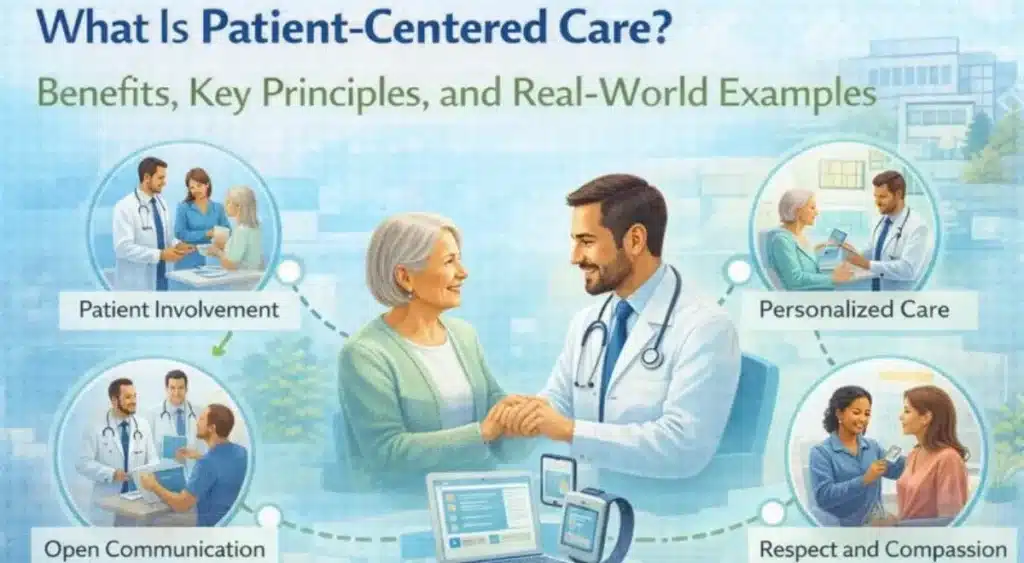
Patient-centered care is one of the most important ideas shaping how healthcare is delivered today. Patient-centered care puts the person, not the illness, at the center of every clinical interaction. This approach is a change from health systems that are moving away from episodic, provider-driven models.
Instead of saying, “What is wrong with this patient?” Patient-centered care asks, “What is most important to this patient?” This difference changes the way care is planned, given, and judged in a big way.
In this blog, we talk about what patient-centered care really means, why it matters, and give real-life examples of it, with a focus on nursing, where this approach has the most obvious and immediate effects.
What does it mean to care for patients?
Patient-centered care is a way of providing health care that takes into account each patient’s unique needs, preferences, values, cultural background, and life situation. Medical evidence and the patient’s values about their care and health outcomes are what doctors use to make clinical decisions.
In a model that puts the patient first:
- Patients are involved in making decisions.
- Care plans are not the same for everyone; they are unique.
- People talk to each other in an open, polite, and ongoing way.
- Emotional, social, and mental health needs in addition to physical health.
This method sees patients as whole people, not just diagnoses or numbers on a chart. It also knows that health outcomes are better when patients feel heard, informed, and involved.
Why patient-centered care is important in today’s healthcare system
It’s harder than ever to obtain health care these days. Many patients have more than one long-term illness, take many different medicines, and see many different doctors in different places. In this setting, patient-centered care is not just nice to have; it’s necessary.
Some of the main benefits are
- Better clinical results
When patients know what their care plans are and have a say in decisions, they are more likely to follow them. Patients are more likely to take their medications as prescribed, go to follow-up appointments, and take care of themselves.
- More satisfied patients
Patients consistently express greater satisfaction when they perceive respect, attentive listening, and active involvement in their care. Trust and disclosure make the relationship between the clinician and the patient stronger.
- Care that is better organized
Patient-centered care makes it easier for care teams to talk to each other, which cuts down on fragmentation, service duplication, and medical errors that could have been prevented.
- Cheaper healthcare
By focusing more on prevention, education, and early intervention, patient-centered care helps cut down on unnecessary hospital stays and trips to the emergency room.
- Better access to health care for everyone
Respecting differences in culture, language, and income level helps close care gaps and make things better for patients from varied backgrounds.
Core Principles of Patient-Centered Care
Patients are given information in simple terms so they know their conditions, options, and next steps.
Help with feelings and mental health
Fear, worry, and stress are recognized and dealt with as part of providing care.
Care, coordination, and continuity
Changing between providers, settings, and care levels is simple.
Family and Caregiver Involvement
Family members can help plan care and talk about it with the patient’s agreement.
Deadlines and access
Patients get the care they need when they need it, with no difficulties or delays.
Examples of Care in Action: Patient-Centered Care
It’s easier to understand when you see patient-centered care in action. These are some real-life instances of care in diverse clinical settings, with a focus on nursing.
- Patient-Centered Care in Nursing: Nurses are crucial for making patient-centered care happen. Nurses are at the forefront of providing personalized care.
- Shared Decision-Making at the Bedside: Nurses help patients discuss their options and ensure they are sure about their choices. For instance, the nurse presents several treatment options to a patient suffering from chronic pain. The nurse talks to the patient about the pros and cons of different options and how they will affect their daily life. Then the nurse helps the patient choose an option that fits their goals.
- It is important to be aware of other cultures when providing care: Patient-centered nursing care honors cultural customs, convictions, and communication preferences. A nurse works with dietary services to ensure that people with cultural or religious dietary restrictions receive the right meals.
- Listening and giving emotional support: Often, nurses serve as the primary source of emotional support for patients during their most vulnerable moments. For instance, a patient recently diagnosed with a chronic condition feels anxious about their future. The nurse listens without interrupting, agrees with what the patient says, and connects them with the right educational and support resources.
- Safety, medicine, and learning: With patient-centered nursing care, patients know what medicines they are taking and why. For example, before the patient leaves, a nurse goes over each medication with them, talks about possible side effects, and uses teach-back methods to ensure they understand. This lowers the chance of mistakes at home.
- Involvement of family and caregivers: Nurses often bridge communication between patients and families. Example: A nurse teaches family members how to care for wounds and look for signs of complications with the patient’s permission. This provides caregivers the tools they need to help the patient recover at home.
Care that focuses on the patient is essential throughout the entire care continuum. Throughout the Care Continuum
Patient-centered care is important throughout the entire care journey, not just in the hospital.
- Managing chronic Illness: Patients with chronic illnesses do better with care plans that take into account their daily lives, lifestyle limitations, and personal goals, rather than just strict clinical targets.
- Care for the Transition: Good discharge planning, follow-up coordination, and education lower the number of readmissions and make patients feel more confident after they leave the hospital.
- Primary and Preventive Care: Patient-centered care focuses on preventing illness, getting help early, and sharing the responsibility for keeping people healthy.
Typical Obstacles to Executing Patient-Centered Care
Even though patient-centered care has its benefits, it can be difficult to do all the time.
Some of the most common problems include time limits during clinical visits.
- Time limits during clinical visits
- Staffing is inadequate, and doctors are burning out.
- Disjointed health IT systems
- There is insufficient access to patient data across various care settings.
To overcome these challenges, you will need supportive leadership, team-based workflows, and digital tools that make it easier for patients to participate in meaningful ways.
How technology improves patient-centered treatment
Technology is becoming more and more vital for making patient-centered care work on a wide scale. Digital solutions can be helpful when applied correctly.
- Improve communication and the coordination of care.
- Help with early intervention and remote monitoring.
- Make sure patients are better informed and involved.
- Make it easier for doctors to do their jobs.
Technology should never take the place of human connection. However, it can strengthen it by giving care teams a better idea of what patients need between visits.
Conclusion: Why Patient-Centered Care Is the Way of the Future for healthcare.
As healthcare gets more complicated due to long-term illnesses, differences in care, and rising patient expectations, patient-centered care is a good and well-known way to move forward. By moving the focus from treating illnesses in isolation to working with individuals on their care, this improves outcomes, creates trust, and makes healthcare experiences more equitable and long-lasting.
The real-life examples provided in this talk, notably in nursing and across the care continuum, show how things like shared decision-making, cultural understanding, emotional support, and family involvement can really help patients. With the right leaders, teams that work together, and the right technology, patient-centered care can go from a good notion to a part of everyday life.
HealthArc helps care teams put patient-centered care into action in places outside than the clinic. This makes it easier to keep an eye on things, coordinate better, and get patients more involved between appointments.
visit learn more about how HealthArc helps with patient care

Sudeep Bath
Sales & Tech Leader with 22+ years of experience Former SVP for $37B PE portfolio company Advisor and Board member in number of startups




Categories
Advanced Primary Care Management→AI & Care Coordination→Behavioral Health Integration→Care Management Programs→Chronic Care Management→Digital Health & Software Solutions→General Remote Care Topics→Medication Therapy Management→Pricing & Business Strategy→Principal Care Management→Remote Patient Monitoring→Remote Therapeutic Monitoring→Transitional Care Management→
Related Blog
- January 20, 2026 | Read Time: 13 mins
The Future of Care is at Home, Driven by the Rapid Expansion of Hospital-At-Home Programs.
Healthcare is evolving. A model that brings hospital-level services directly into patients'...
Learn More- December 19, 2025 | Read Time: 12 mins
Engagement Beyond the Clinic: How Mobile Apps Increase Patient Adherence in RPM and RTM Programs
Through the introduction of Remote Patient Monitoring (RPM) and Remote Therapeutic Monitoring...
Learn More- December 15, 2025 | Read Time: 10 mins
G2211 CPT Code: Complete Description, Billing Guidelines & Reimbursement
G2211 CPT code is an add-on HCPCS code that lets you capture...
Learn More