
By Jack Whittaker
| June 4, 2026
⚡ Quick Answer
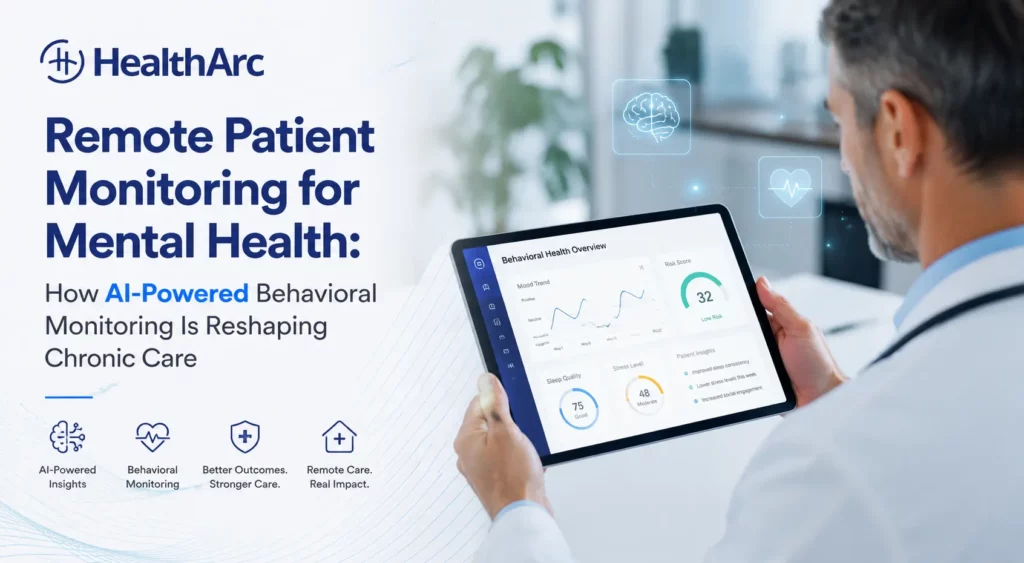
Remote patient monitoring for mental health uses validated digital assessments (PHQ-9, GAD-7, CSSRS), wearable biometric sensors, and AI-driven analytics to continuously track behavioral and physiological markers between clinical visits. Medicare reimburses these services under Behavioral Health Integration (BHI) CPT codes 99484, 99492–99494. Providers may bill BHI concurrently with RPM codes (99453, 99454, 99457, 99458) for patients with co-occurring physical chronic conditions — generating $150–$180 per eligible patient per month when both programs are running.
Depression costs U.S. employers $210 billion annually — not primarily from psychiatric hospitalizations, but from missed workdays, avoidable emergency visits, and preventable complications in patients whose behavioral health went unmonitored between clinical appointments.
Here is the clinical reality most practices underestimate: 37% of adults with a chronic physical condition — hypertension, diabetes, COPD, heart failure — carry a co-occurring mental health diagnosis. Their total medical costs run two to three times higher than patients without behavioral comorbidities. A standard 15-minute quarterly check-in does not give any provider enough data to detect deterioration before it escalates into a crisis.
Remote patient monitoring closes that gap. For mental health specifically, the approach differs from standard RPM in meaningful ways — different assessment instruments, different CPT codes, different AI capabilities, and a different clinical workflow. This 2026 guide covers all of it.
37%
of chronic disease patients have a co-occurring mental health diagnosis
2–3×
higher medical costs when behavioral health goes unmanaged
28%
CAGR for AI-powered behavioral health monitoring through 2030
What Makes Mental Health RPM Different from Standard RPM?
Standard remote patient monitoring tracks physiological measurements — blood pressure, glucose, weight, oxygen saturation — transmitted from FDA-cleared devices. Mental health RPM incorporates that same infrastructure but adds a layer most RPM platforms do not address: behavioral and psychological data collection.
That means three data streams working in parallel:
- Validated psychometric assessments delivered digitally. Tools like the PHQ-2/PHQ-9 (depression), GAD-7 (anxiety), CSSRS (suicide risk), AUDIT (alcohol use), and PCL-5 (PTSD) are administered via SMS or in-app check-ins on a defined schedule — weekly, biweekly, or triggered by clinical flags. Patients complete these on any phone. No smartphone or data plan required for SMS-based delivery.
- Passive biometric signals from wearables. Heart rate variability (HRV) is one of the strongest objective markers of autonomic stress response — measurable continuously from a wrist-worn device. Sleep duration, daily step counts, and resting heart rate shift measurably before a patient subjectively reports feeling worse. AI models trained on this data identify prodromal deterioration windows before the patient or their family notices anything.
- Medication adherence and engagement signals. Smart pill dispensers and medication adherence apps generate timestamped compliance data. Combined with digital check-in response patterns, these signals give the care team a real-time engagement index — a proxy for how well the patient manages their condition day to day.
Which Mental Health Conditions Qualify for Remote Patient Monitoring?
Any diagnosed behavioral health condition documented in the medical record can qualify a patient for Behavioral Health Integration (BHI) services — the primary Medicare billing pathway for mental health remote monitoring. Qualifying conditions include:
- Major depressive disorder (MDD) — the most prevalent qualifying condition; PHQ-9 is the standard monitoring instrument
- Generalized anxiety disorder (GAD) — monitored via GAD-7 scores and HRV biometric data
- Bipolar disorder — mood cycling, sleep disruption, and activity pattern changes are all trackable passively
- Post-traumatic stress disorder (PTSD) — PCL-5 administered digitally; sleep and hyperarousal markers monitored via wearable
- Schizophrenia and schizoaffective disorder — medication adherence monitoring is particularly high-value
- Substance use disorder — AUDIT and DAST assessments; engagement data functions as an early relapse indicator
- Behavioral health as a comorbidity of any chronic condition — the largest patient population, and where the financial case for combined BHI + RPM is strongest
The Depression–Chronic Disease Connection Providers Cannot Afford to Overlook
Patients with co-occurring depression and diabetes are 2.3 times more likely to have poor glycemic control than diabetic patients without depression. Patients with depression and heart failure face a 50% higher 90-day readmission rate. The comorbidity is not incidental — depression impairs the self-management behaviors (diet, medication adherence, physical activity, appointment attendance) that determine outcomes in virtually every chronic condition.
💡 The 4–6 Week Window
RPM program data shows that behavioral deterioration precedes physical deterioration. A patient’s daily step count dropping 40% over three weeks, combined with fragmented sleep and a PHQ-9 increase of 5+ points, reliably precedes a hemoglobin A1c spike or an ED visit by four to six weeks. That window is where AI-powered behavioral monitoring creates clinical value no quarterly office visit can replicate.
For a broader view of the chronic conditions where remote monitoring changes outcomes, see HealthArc’s guide to common conditions monitored with remote patient monitoring.
How AI Detects Behavioral Deterioration Before Patients Report It
The AI layer in mental health remote monitoring is not a chatbot. It is a pattern-recognition engine trained on longitudinal behavioral and biometric data to surface risk signals no human reviewer looking at a single data point would catch.
Anomaly detection against personal baselines. AI models do not compare a patient’s HRV to a population average. They establish each individual’s personal baseline over the first two to four weeks of enrollment, then flag deviations from that baseline. A patient whose resting HRV naturally runs low does not trigger false alerts. A patient whose HRV drops 25% from their personal baseline does — even if that number looks unremarkable on a population chart.
Temporal pattern recognition. Sleep fragmentation on a single night means little in isolation. Sleep fragmentation combined with declining step counts, a PHQ-9 increase of four points over two weeks, and three consecutive missed medication doses is a high-confidence deterioration signal. AI correlates these data streams across time — something a care coordinator reviewing individual reports cannot do at scale across a panel of 150 patients.
Escalation tiering. Not every alert requires a physician call. AI-generated alerts are risk-tiered: low-risk flags route to a care coordinator for a wellness check-in message; moderate-risk flags route to an RN for a scheduled telehealth touchpoint; high-risk flags — elevated CSSRS score, acute PHQ-9 increase, biometric plus assessment signal convergence — route immediately to the treating clinician for same-day intervention. This tiering is what makes mental health RPM scalable at the practice level.
For the full technical breakdown of how AI functions within the RPM infrastructure, see HealthArc’s analysis of AI in remote patient monitoring: predictive analytics and personalized care.
BHI CPT Codes and Medicare Reimbursement Rates (2026)
Behavioral Health Integration (BHI) is the primary CMS billing pathway for mental health remote monitoring. BHI is billed by the treating physician or other qualified health professional (QHP), with patient-facing time provided by clinical staff — RNs, LPNs, licensed clinical social workers — under general supervision.
| CPT Code | Service Description | Time Required | 2026 Medicare Rate (approx.) |
|---|---|---|---|
| 99484 | Behavioral health care management — general BHI model. No psychiatric consultant required. Any practice can bill this. | ≥20 min/month by clinical staff | $50–$58/month |
| 99492 | Initial COCM — Psychiatric Collaborative Care Model, first calendar month. Requires treating physician, BHCM, and psychiatric consultant. | ≥70 min first month | $210–$220 |
| 99493 | Subsequent COCM — Psychiatric Collaborative Care Model, subsequent months. | ≥60 min/month | $170–$180 |
| 99494 | Additional 30 min add-on to 99492 or 99493. | +30 min add-on | $62–$68 |
| 99453 | RPM setup and patient education (one-time, billed once per episode). | One-time setup | $19–$21 |
| 99454 | RPM device supply and daily data transmission — monthly. | ≥16 days data/month | $55–$65/month |
| 99457 | RPM — first 20 min interactive communication per month. | ≥20 min/month | $55–$62/month |
| 99458 | RPM — additional 20 min add-on to 99457. | +20 min add-on | $42–$48/month |
💡 99484 vs. 99492/99493 — Which Code Applies to Your Practice?
Code 99484 applies to the general BHI model — any practice providing integrated behavioral health care management using clinical staff, a validated assessment tool, and a documented care plan. No psychiatric consultant is required, making this the most accessible entry point for primary care.
Codes 99492–99494 apply specifically to the Psychiatric Collaborative Care Model (COCM), which requires a treating physician, a behavioral health care manager (BHCM — typically a social worker or psychologist), and a psychiatric consultant. The consultant can be part-time or contracted — not necessarily a full-time staff psychiatrist.
See Exactly What Your Practice Could Earn
100 patients in combined BHI + RPM = $15,000–$18,000/month in Medicare revenue. Use HealthArc’s free RPM Revenue Calculator to model your specific practice size.
Can You Bill BHI and RPM Together for the Same Patient?
Yes — with specific documentation requirements.
A patient who has both a qualifying chronic physical condition (hypertension, diabetes, COPD, heart failure) and a diagnosed behavioral health condition can be enrolled in both an RPM program and a BHI program simultaneously. CMS permits concurrent billing provided:
- Each service addresses a distinct condition and serves a distinct clinical purpose
- Time counted toward RPM codes (99457/99458) is not double-counted toward BHI (99484)
- Both sets of service requirements are independently met and documented each calendar month
✅ Revenue Example: 100-Patient Combined Program
RPM at full utilization (99454 + 99457 + 99458) = ~$95–$110/patient/month. Add BHI (99484) = +$50–$58/patient/month. Total: $145–$168/patient/month for patients enrolled in both. This is not a billing workaround — CMS designed these programs to operate in concert precisely because behavioral-physical comorbidity is so prevalent in the Medicare population.
What Devices and Tools Are Used for Mental Health RPM?
Mental health remote monitoring does not require specialized psychiatric hardware. The toolset combines standard RPM devices with validated behavioral software instruments.
Assessment Tools (Software — No Additional Hardware Required)
- PHQ-2 and PHQ-9 — depression screening and severity tracking
- GAD-7 — generalized anxiety disorder severity
- CSSRS — Columbia Suicide Severity Rating Scale for high-risk patients
- PCL-5 — PTSD Symptom Scale
- AUDIT-C — alcohol use disorder screening
- DAST-10 — drug abuse screening
All assessments are delivered via SMS or the patient-facing mobile app. No smartphone, data plan, or app download required for SMS delivery — critical for elderly Medicare patients with limited digital literacy.
Biometric Monitoring Devices (Hardware)
- Wrist-worn continuous monitors — HRV, resting heart rate, sleep stages, daily step count; passive 24/7 collection
- Blood pressure monitors — essential for patients with comorbid hypertension and anxiety, the most common physical-behavioral pairing
- Glucometers and CGMs — for the diabetes-depression population; glucose dysregulation and mood are bidirectionally linked
- Smart medication dispensers — timestamped dose dispensing; adherence data is among the strongest behavioral risk signals for psychiatric patients
HealthArc’s platform integrates 40+ FDA-cleared device brands across cellular LTE, Bluetooth, and wearable connectivity — including devices from Abbott, Roche, Dexcom, and Nonin. Cellular-enabled devices require no Wi-Fi setup, eliminating the most common enrollment barrier in elderly and rural populations. Read more: wearable devices and their role in remote patient monitoring.
Clinical Workflow: How to Implement a Mental Health RPM Program
- Patient identification. Pull patients from your EHR using ICD-10 codes for behavioral health conditions (F32.x for MDD, F41.1 for GAD, F43.10 for PTSD, F31.x for bipolar) and cross-reference with chronic condition diagnoses. Patients on both lists are your highest-priority enrollment targets for combined BHI + RPM.
- Enrollment and digital consent. Obtain documented consent covering remote monitoring and behavioral health integration. For SUD patients, ensure your consent language addresses the additional protections under 42 CFR Part 2. HealthArc uses HIPAA-compliant digital e-consent with timestamped, signed documentation.
- Baseline assessment and care plan. Administer PHQ-9, GAD-7, and CSSRS (as indicated) at enrollment and create a behavioral health care plan documenting: diagnoses, target outcomes, monitoring parameters, escalation thresholds, care team roles, and planned interventions. This care plan is required for BHI billing.
- Device provisioning and patient onboarding. Ship cellular-enabled devices directly to the patient. A dedicated enrollment specialist calls to walk them through device use — typically 15–20 minutes. HealthArc’s clinical team manages onboarding entirely, removing the burden from practice staff.
- Ongoing monitoring and alert management. The AI platform monitors incoming assessment scores and biometric data against each patient’s individual baseline. Alerts are tiered and routed to the appropriate care team member. All monitoring time is logged automatically for billing documentation.
- Monthly care management touchpoints. Clinical staff conduct at least one billable interaction per month — phone, secure message, or video — to review assessment trends, medication adherence, and care plan progress. This contact time is documented and attributed to the applicable BHI or RPM billing code.
- Escalation and care coordination. When AI flags high-risk convergence — elevated CSSRS, acute PHQ-9 increase, missed medication combined with biometric anomaly — the care team escalates to the treating clinician for same-day intervention. HealthArc’s pod-based clinical team handles all escalation routing.
HealthArc’s pod-based clinical model — RNs, LPNs, and care coordinators — manages steps 2 through 7 on behalf of the practice. Practices run a full behavioral health monitoring program without hiring specialized staff. Learn more: HealthArc remote patient monitoring platform.
HIPAA and Data Privacy Considerations for Mental Health Monitoring Data
Mental health data carries heightened legal sensitivity beyond standard HIPAA. Providers running behavioral health monitoring programs need to understand two distinct regulatory frameworks before enrolling patients.
HIPAA Privacy Rule. Assessment scores such as PHQ-9 and GAD-7 results are clinical measurements, not psychotherapy notes — they receive standard HIPAA protections rather than the heightened restrictions that apply to psychotherapy session notes under 45 CFR §164.524. The distinction matters for your documentation and release policies.
42 CFR Part 2 (Substance Use Disorder Data). If your program monitors patients with substance use disorders, 42 CFR Part 2 applies — a stricter federal framework than HIPAA for SUD treatment records, with narrow exceptions for disclosure. Providers integrating SUD monitoring need specific consent language and restricted data-sharing policies beyond standard HIPAA forms.
⚠️ Compliance Requirement
Your RPM and BHI platform must hold a signed Business Associate Agreement (BAA), encrypt data at rest and in transit, and — as a baseline security standard — maintain SOC 2 Type II certification. HealthArc holds SOC 2 Type II certification with specific data handling policies for behavioral health information. See: SOC 2 and HIPAA compliance for remote patient monitoring.
What the Clinical Evidence Shows About Mental Health RPM Outcomes
The evidence base for digital behavioral health monitoring has grown substantially since the post-pandemic telehealth expansion. Key findings:
- PHQ-9 response rates: Digital collaborative care programs report 40–60% response rates (≥50% PHQ-9 reduction) at 12 weeks, compared with 20–30% in usual care
- Emergency department utilization: Integrated behavioral health monitoring programs show 25–35% reductions in ED visits for psychiatric presentations within the first year
- Medication adherence: RPM programs with adherence monitoring show 20–30% improvement in psychiatric medication adherence at six months — particularly significant for antidepressants and antipsychotics, where adherence drops sharply after the initial 30 days
- Patient engagement: SMS-delivered assessment completion rates average 68–74% per month — consistently higher than clinic-based assessment completion, which averages below 40%
- Market growth signal: The AI in remote patient monitoring market — behavioral health monitoring is its fastest-growing segment — reached $2.53 billion in 2025 and is projected to grow at a 28% CAGR through 2030 (Grand View Research). No major RPM vendor has yet built a dominant content or clinical position in this segment, which means early-movers capture disproportionate patient volume
How HealthArc’s Behavioral Health Integration Program Works
HealthArc’s Behavioral Health Integration program is built for primary care practices that want to add mental health monitoring without restructuring their clinical operations or adding headcount. In coordination with HealthArc’s chronic care management program, providers can address both physical and behavioral health comorbidities through one integrated platform and one clinical support team.
The program includes:
- Digital delivery of validated assessments (PHQ-2/9, GAD-7, CSSRS, PCL-5, AUDIT) via SMS — no app required for patients
- HIPAA-compliant platform with SOC 2 Type II certification and 42 CFR Part 2 data handling for SUD patients
- AI-powered risk stratification and tiered alert routing across the patient panel
- Pod-based clinical team (RNs, LPNs, care coordinators) managing monthly care management contacts on behalf of the practice
- Automated billing documentation: time logs, assessment scores, care plan updates, and escalation records
- EHR integration via HL7 and FHIR across 55+ major EHR systems — assessments and clinical notes flow directly into the existing patient chart
- Concurrent RPM enrollment for patients with physical chronic conditions, with separate time-tracking for BHI and RPM billing compliance
✅ Operational Timeline
Practices using HealthArc’s full-service model have reported operational enrollment of their first BHI cohort within 30 to 45 days of contract signing, with revenue impact visible in the first billing cycle. HealthArc serves 750+ provider organizations across 40+ states, supporting more than 65,000 active patients.
Frequently Asked Questions
Ready to Launch a Mental Health RPM Program?
HealthArc provides everything your practice needs — validated assessment tools, AI-powered monitoring platform, cellular-enabled devices, and a dedicated clinical team — to run BHI and RPM programs without adding internal staff. First cohort enrolled in 30–45 days.
About the Author
KM
Kaitlyn Batch-Monteforte
RN
Clinical Manager — RPM & CCM Programs, HealthArc
Kaitlyn Batch-Monteforte is a Registered Nurse and Clinical Manager at HealthArc, where she oversees Remote Patient Monitoring and Chronic Care Management programs across a panel of thousands of active patients. With eight years of clinical experience specializing in RPM and CCM, she designs and maintains the clinical workflows, escalation protocols, and care team training programs that underpin HealthArc’s patient monitoring operations.


Ready to connect care between visits?
See how HealthArc runs RPM, CCM and seven more CMS programs — the platform, the devices and the clinical team — on a single demo.